On August 25, Robert Webber and Phil Kenyon released a document called "A Call to an Ancient Evangelical Future," through Christianity Today. The theological advisors included Hans Boersma, Howard Synder, Kevin Vanhoozer, and D. H. Williams. They are circulating it for signatures and expect around 600-800 to comply eventually.
There is a lot of what they say with which to be sympathetic. I affirm with them that each generation needs to "examine its faithfulness to God's revelation in Jesus Christ." And I affirm that by looking at the whole of Christian history, Christians today might find wisdom for living in this world under Christ's Lordship. Plus, as someone who recognizes the importance of narrative for embedding beliefs and practices into a coherent web of meaning, I can affirm their stress on narrative.
However, I do have questions about the document as well. For example, while I affirm the "primacy of the biblical narrative" in its big story (whether stated, as they do, as creation, incarnation, re-creation, or in a more "Reformed" way as creation, fall, redemption, consummation), I worry that the way this is stated could be placed in stark opposition to "propositions": "Today, we call evangelicals to turn away from modern theological metehods that reduce the gospel to mere propositions." Well, I don't know too many theologians who do theology merely by propositions, i.e. without paying attention to genre, context, narrative, etc.
But do the writers mean "merely" or do they really mean "primarily"? If the writers mean primarily, then I wonder how it is possible to do theology at all--anyone who has sloughed through Vanhoozer's Drama of Doctrine knows how "propositional" the entire book is. The opposition of narrative and proposition is not only not good, it is not possible, in my estimation. I worry that the writers may unwittingly suggest such.
Further, by stressing the "biblical narrative," the writers may unwittingly be flattening the multiplicity of genres and meanings generated by the individual biblical texts themselves. There is an overall "history of the work of redemption" (to use Jonathan Edwards' phrase) that the Bible relates, but that doesn't mean that the history merely shapes us by being told. There is also content in that narrative. As J. Gresham Machen put it, "Christ died" is a fact (or a part of the narrative, we would say), but "Christ died for us" is a doctrinal statement (or a proposition) that we cannot do without.
Another quibble I have with the document is how the writers place the problem of individualism on evangelical Protestantism: "individualistic evangelicalism has contributed to the current problems of churchless Christianity." Well, no doubt evangelicalism has to shoulder some of the blame and so can be said to have "contributed." But what about mainstream Protestantism? Did their overstress of the corporate nature of sin and salvation lead to the problems of churchless Christianity? I think that is an ironic consquence of the Social Gospel--the overstress on the corporate as actually fueled individualism, reasserted against that overstress. A biblical balance needs to be maintained between the individual and corporate relations.
Perhaps the biggest problem I have with the document is the historical claim in the third point: "we call for the church's reflection anchored in the Scriptures in continuity with the theological interpretation learned form the early fathers." While that sounds neat and sort of emergent-trendy, my question is this: which early fathers? Origen? Chrysostom? Augustine? Jerome? Ignatius? There were actually profound disagreements among the fathers on how texts should be read and what they should mean. Such an evaluation of the patristics--placed on the same level as the apostolic tradition, as D. H. Williams suggests in his books--ultimately (again) flattens out the historical record. It simply not that easy to find an authorative resource in the early church that will solve the problems of "theological interpretation."
The tradition(s) do need to be paid attention to--remember, I'm a church history prof. But I'm not nearly as sanguine as the authors of "A Call" to believe that a turn to the tradition bring the solution they seek: they believe the current problem is that "modern methods compartmentalize God's glory by analyzing its separate parts, while ignorning God's entire redemptive work as recapitulated in Christ." Well, one of the few works of epic history in the patristic period that would help in this regard is Augustine's City of God. And yet how many seminary curricula allow enough space to have students read that great work? Other patristics do not demonstrate such a grand vision--so how will reference to the Fathers solve the problem observed?
Again, the document as a whole is useful. There is a great deal to agree with here. Still, it seems that ours is an age of manifesto-writing and conference-attending; it seems that it may be more useful to focus our attentions on actually living the life of "cruciform holiness and commitment to God's mission in the world" to which the document actually calls us. That may make a greater impact in the world than all the manifestos and calls and blogs combined.
(HT: Fullness of Time)
Thursday, August 31, 2006

Wednesday, August 30, 2006
Curt Schilling: Hall of Famer?
Today, Curt Schilling struck out his 3000th batter, making him the 14th to reach that plateau. Historically, that has generally guaranteed entrance into Baseball's Hall of Fame; the only retired player with 3000 strikeouts who is not in the HOF is Bert Blyleven. The question I want to ask is: does Curt Schilling belong in the HOF?
Well, one problem here is Schill's win-loss record: 206-137 is a good win percentage (.600), but 206 wins ranks him around 93rd all-time, behind such luminaries as Bob Welch (211), Rick Reuschel (214), Jerry Reuss (220), Joe Niekro (221), Frank Tanana (240), and Dennis Martinez (245). It appears that Schill simply was hurt too many seasons to have piled up the wins needed for election into the HOF: 1994, 2 wins; 1995, 7; 1996, 9; 2000, 11; 2003, 8; 2005, 8. In the other 9 seasons where Schilling was a full-time performer, he averaged 17 wins. If he had won 17 in those other six seasons, he would have 52 additional wins for a total of 261. Suddenly, it is a more realistic conversation.
Another problem with Schilling's candidacy is who is currently NOT in the HOF: namely, Blyleven and Jack Morris. Morris, I think, should be in the HOF because he was one of the most consistently dominant pitchers of his generation--if you average his 18-year career out over 162 games, his numbers would be 16-11, 241 innings per season, 156 Ks, 1.219 WHIP (Walks plus Hits over Innings Pitched; any number around 1.0 is excellent). Add this together with the fact that Morris was one of the great big game pitchers (4-2, with a 2.96 ERA in 3 World Series victories with the Tigers, Twins, and Blue Jays), especially in that memorable 1991 Game 7, 10-inning, 1-0 victory against the Braves. For that, he was the World Series MVP.
Blyleven bears a lot of basic similarity to Morris. If you average his 22 year career out, he would be 14-12, 243 innings per season, 182 Ks, 1.198 WHIP. He was as dominate in the postseason, with a total record of 5-1, with a 2.47 ERA in the postseason, which included two World Series victories (with the Twins and Pirates). The big problem was that Blyleven was not viewed as dominate by his peers; he only made two All-Star teams (73 and 85) compared to Morris' five teams in ten years (81, 84, 85, 87, 91). If one had to choose between Morris and Blyleven, then Morris should get the call.
Schilling should be in the conversation, but is probably behind both men. Averaging his 18 year career out would yield a 14-9, 3.40 ERA, 215 Ks, 1.12 WHIP. In the postseason, Schill is 8-2, 2.06 ERA with two WS victory. Schilling has 6 All-Star appearances (97-99, 01-02, 04), was the NLCS MVP and WS MVP, and was second in the Cy Young balloting three times. In overall averaged numbers, Schilling compares favorably. But Morris's numbers are overall more impressive and consistent; he should go in before Schilling would be considered.
The one difference, to come full circle, is the strikeouts: does Schilling's 3000 strikeouts mitigate the win total (Morris had over 2800 strikeouts)? Probably not. However, there is one other factor here--does the fact that Schilling led the Red Sox to the 2004 World Series, their first in 86 years, pitching on a bum ankle, merit additional consideration? I wouldn't be surprised if that would factor in more to his election than his numbers.
In the end, though, Schilling is probably 30-40 wins away. If he could pitch three more strong seasons and end up with 250 wins and around 3400 strikeouts, I think it would be hard to keep him out of the HOF. But first, the writers should elect Jack Morris.
Well, one problem here is Schill's win-loss record: 206-137 is a good win percentage (.600), but 206 wins ranks him around 93rd all-time, behind such luminaries as Bob Welch (211), Rick Reuschel (214), Jerry Reuss (220), Joe Niekro (221), Frank Tanana (240), and Dennis Martinez (245). It appears that Schill simply was hurt too many seasons to have piled up the wins needed for election into the HOF: 1994, 2 wins; 1995, 7; 1996, 9; 2000, 11; 2003, 8; 2005, 8. In the other 9 seasons where Schilling was a full-time performer, he averaged 17 wins. If he had won 17 in those other six seasons, he would have 52 additional wins for a total of 261. Suddenly, it is a more realistic conversation.
Another problem with Schilling's candidacy is who is currently NOT in the HOF: namely, Blyleven and Jack Morris. Morris, I think, should be in the HOF because he was one of the most consistently dominant pitchers of his generation--if you average his 18-year career out over 162 games, his numbers would be 16-11, 241 innings per season, 156 Ks, 1.219 WHIP (Walks plus Hits over Innings Pitched; any number around 1.0 is excellent). Add this together with the fact that Morris was one of the great big game pitchers (4-2, with a 2.96 ERA in 3 World Series victories with the Tigers, Twins, and Blue Jays), especially in that memorable 1991 Game 7, 10-inning, 1-0 victory against the Braves. For that, he was the World Series MVP.
Blyleven bears a lot of basic similarity to Morris. If you average his 22 year career out, he would be 14-12, 243 innings per season, 182 Ks, 1.198 WHIP. He was as dominate in the postseason, with a total record of 5-1, with a 2.47 ERA in the postseason, which included two World Series victories (with the Twins and Pirates). The big problem was that Blyleven was not viewed as dominate by his peers; he only made two All-Star teams (73 and 85) compared to Morris' five teams in ten years (81, 84, 85, 87, 91). If one had to choose between Morris and Blyleven, then Morris should get the call.
Schilling should be in the conversation, but is probably behind both men. Averaging his 18 year career out would yield a 14-9, 3.40 ERA, 215 Ks, 1.12 WHIP. In the postseason, Schill is 8-2, 2.06 ERA with two WS victory. Schilling has 6 All-Star appearances (97-99, 01-02, 04), was the NLCS MVP and WS MVP, and was second in the Cy Young balloting three times. In overall averaged numbers, Schilling compares favorably. But Morris's numbers are overall more impressive and consistent; he should go in before Schilling would be considered.
The one difference, to come full circle, is the strikeouts: does Schilling's 3000 strikeouts mitigate the win total (Morris had over 2800 strikeouts)? Probably not. However, there is one other factor here--does the fact that Schilling led the Red Sox to the 2004 World Series, their first in 86 years, pitching on a bum ankle, merit additional consideration? I wouldn't be surprised if that would factor in more to his election than his numbers.
In the end, though, Schilling is probably 30-40 wins away. If he could pitch three more strong seasons and end up with 250 wins and around 3400 strikeouts, I think it would be hard to keep him out of the HOF. But first, the writers should elect Jack Morris.
Designed for Worship
This is a very cool website, put together by Nashville Public Television, on church architecture in Nashville. I particularly liked (surprise) the Presbyterian churches. I wonder what it was like to hear James I. Vance, who was quite the orator as well as a theological progressive, at First (now Downtown) Presbyterian Church in that Egyptian Revival monstrosity. Likewise, I wonder what it would have been like to worship in that simple building at Hermitage with Andrew Jackson, who became a member there after he retired as president in 1837.
Tuesday, August 29, 2006
John Owen
When I read Mark's reflections on his disappointment with reading Owen's Death of Death, I felt deep sympathy with him. Because--and this is probably shocking to say as a church history professor--I have a hard time reading John Owen. And I have the same sense of disappointment and it is all J. I. Packer's fault (well, I say that last line with my tongue planted in my cheek).
I first came at the Puritans through Packer's A Quest for Godliness and Martyn Lloyd-Jones' The Puritans. And both of those men felt that John Owen was the primer Puritan theologian, a Puritan's Puritan, if you will. I thought that would never truly be Reformed nor a worthwhile PhD in church history if I didn't read him. Plus, both Lloyd-Jones and Packer presented Owen as the supreme doctor of the soul, the one Puritan who would fire both mind and heart.
Well, that sounded pretty good. So, one of the first two books I bought when I arrived at Westminster Seminary was John Owen, Works, vol. 5: Faith and Its Evidences, which also had material on justification (the other book, incidentally, was D. G. Hart's Defending the Faith). As I plowed into Owen's weighty tome, I found it generally indescipherable, in terms of prose. His sentences were ponderous; his distinctions interminable. Plus, the print was small (which set me back reading the Banner of Truth version of Jonathan Edwards' Works as well). I think I made it about 80 pages in and gave up.
I've subsequently spent a lot of money on Owen--Death of Death in paperback, other volumes in the Works, even "modernized" Owen in the Puritan Paperbacks--and have had the same result with one notable exception: Works, vol. 2: Communion with God. For whatever reason, in that volume, Owen didn't write like Owen. Rather, he seems almost mystic, rapturous, delightful and delighting in his love-relationship with the Triune God. I was able to "conquer" that volume in short order, because it was so delightful to read.
The other "Owen book" that I was able to make it through was Sinclair Ferguson's John Owen on the Christian Life, which was his PhD dissertation. I once remarked to him that since I had read his book, there was no need to read Owen; to which he replied, "No, Sean, no--read Owen, not me." Well, I've tried--and have been thoroughly unsuccessful.
I first came at the Puritans through Packer's A Quest for Godliness and Martyn Lloyd-Jones' The Puritans. And both of those men felt that John Owen was the primer Puritan theologian, a Puritan's Puritan, if you will. I thought that would never truly be Reformed nor a worthwhile PhD in church history if I didn't read him. Plus, both Lloyd-Jones and Packer presented Owen as the supreme doctor of the soul, the one Puritan who would fire both mind and heart.
Well, that sounded pretty good. So, one of the first two books I bought when I arrived at Westminster Seminary was John Owen, Works, vol. 5: Faith and Its Evidences, which also had material on justification (the other book, incidentally, was D. G. Hart's Defending the Faith). As I plowed into Owen's weighty tome, I found it generally indescipherable, in terms of prose. His sentences were ponderous; his distinctions interminable. Plus, the print was small (which set me back reading the Banner of Truth version of Jonathan Edwards' Works as well). I think I made it about 80 pages in and gave up.
I've subsequently spent a lot of money on Owen--Death of Death in paperback, other volumes in the Works, even "modernized" Owen in the Puritan Paperbacks--and have had the same result with one notable exception: Works, vol. 2: Communion with God. For whatever reason, in that volume, Owen didn't write like Owen. Rather, he seems almost mystic, rapturous, delightful and delighting in his love-relationship with the Triune God. I was able to "conquer" that volume in short order, because it was so delightful to read.
The other "Owen book" that I was able to make it through was Sinclair Ferguson's John Owen on the Christian Life, which was his PhD dissertation. I once remarked to him that since I had read his book, there was no need to read Owen; to which he replied, "No, Sean, no--read Owen, not me." Well, I've tried--and have been thoroughly unsuccessful.
Monday, August 28, 2006
Presbyterian Church in "America" (or at least east of the Mississippi)
I ran across this fascinating picture of where PCA churches are on Mark Bates' blog. Each push pin represents the location of a PCA congregation in 2005:

(If you want to see this picture better, go to Mark's blog and click on the picture there.) What it appears is that the PCA is especially strong in the northeast (especially the corridor between NYC and Philly) and in the southeast. We have a strong (and growing) concentration in Chicago and Los Angeles and churches in the major metro areas of Texas.
(If you want to see this picture better, go to Mark's blog and click on the picture there.) What it appears is that the PCA is especially strong in the northeast (especially the corridor between NYC and Philly) and in the southeast. We have a strong (and growing) concentration in Chicago and Los Angeles and churches in the major metro areas of Texas.
Now there are a number of things you can conclude from this map. On the one hand, those who see the PCA as a "southern Presbyterian church" have some justification for this. Statistically, there are simply more PCA churches in the South than anywhere else. Another thing that you could say is that the PCA is showing a greater awareness for planting churches in metro areas throughout the country--Los Angeles, Houston, Dallas, Indy, Chicago, Denver, Seattle, NYC, Orlando, etc., all have healthy representation of churches.
But the thing that strikes me as a historian who does about Presbyterianism is this--our strength lies exactly where Presbyterianism has historically been strongest. If you know anything about Presbyterianism in America, you know that the centers of Presbyterianism have been places like Philadelphia, Chicago, NYC, Charlotte, St. Louis, Atlanta. In fact, if you think just where the old PC(USA) had seminaries, we have a strong presentation of churches in those places. That certainly has to mean something.
I think it means that, while we certainly have a great deal of work to do to reach the west coast, the fact that Presbyterian churches are flourishing in the parts of the country where you'd expect them to do so should give us great hope as well. People who grew up believing that Presbyterians stood for solid doctrine, careful government, reverent and biblical worship continue to flock to that same kind of Presbyterianism, even in a younger version (such as the PCA).
But another thing here are the oddities. For example, historically Virginia has been strong Presbyterian country, but there are relatively few PCA churches in the state, save along the I-95 cooridor. We simply have to do a better job planting churches in northern Virginia and in the Valley; as we continue to do RUF in the state at the major universities, church planting should proceed apace. In addition, there is a huge blank space in the state of Missouri; this has been good ground for Presbyterianism in the past, but our efforts have been restricted mainly to St. Louis (even Kansas City has relatively few PCA churches). Other parts of the Rust Belt are similarily sparse--Ohio, Indiana, Michigan all are fairly "light" when it comes to the PCA.
Still, this was a fascinating map that should encourage us as well as motivate us to continue to seek God's Kingdom in biblical, Presbyterian churches throughout our entire country.
Cluster Map
I've got a new do-hickey (technical jargon) on this blog: a cluster map, so you can see where in the world people are accessing this blog. I saw it on Mark Horne's blog and thought it was so cool-looking that I thought I would try it.
Retreating
Sorry that I've not blogged over the past week--last week was chewed up retreating and preparing: President's Cabinet retreat, faculty retreat, new student receptions, getting my syllabus ready (I'm teach two sections of Ancient and Medieval Church History this semester), etc. I hope to be more faithful this coming week.
Monday, August 21, 2006
Kidnapped
I am becoming a big Robert Louis Stevenson fan. A year or so ago, I re-read Treasure Island. And on Saturday, I read his Kidnapped. I find a number of things fascinating about Stevenson, which I would pursue more, especially if I was an English literature professor instead of a church historian.
- There are some obvious parallels with his career and Mark Twain's. They both find their initial popularity in writing "travel" books, but they make their huge successes in writing profound novels that have subsequently become viewed as "children's books." Both Kidnapped and The Adventures of Huckleberry Finn have important commentary on place, religion, dialect and language, and identity. In addition, they wrote at the same time, both explored the South Pacific, and wrestled with/against their native Presbyterianism.
- That leads to the second thing that would be interesting to explore, namely Stevenson and religion. Most of the quick hitting biographies in the internet suggest that RLS rebelled against his father's "rigid Calvinism." And yet, at least in Kidnapped, Church of Scotland ministers are presented in a positive light, offering guidance and friendship that is only paralleled by the lawyer, Rankeillor. It would be fun to comb through Stevenson's letters, especially; my guess is that he was something of a rake, but doesn't appear to have the same agnst over a "benevolent" diety as other Victorians (like Twain or Charles Darwin) .
- One other thing that might be interesting would be RLS's reception in America. It doesn't appear that he was as popular in the US as he was in Scotland and England. I wonder why that would be--was it because he wasn't as high brow as Henry James or William Deans Howell? Was it the result of Twain's own huge popularity and marketing brilliance? Was it because he was too easily lumped together with Walter Scott? Was it because the height of his powers (1883-1894) were during a time of economic recession and political upheaval? Was it because this period was followed by a time of heightened "realism" that would eventually produce Hemingway, Fitzgerald, Dresser, and Mencken?
Tiger
Just a follow-up to my post last Monday on Tiger and Phil--all you need to know: Tiger, -18, wins his third PGA Championship and ties his own PGA Championship scoring record in relation to par (which he had set, with Bob May, at the 2000 PGA Championship at Valhalla in Louisville, Ky.); Phil, -6, blew up on the weekend. Also, I said that it was a strange tournament: Shaun Micheel, who had missed seven straight cuts, finished second with a number (-13) that would have won the last five PGA Championships. When does Tiger get to 19 majors? One projection was the 2011 British Open; he'll be 35 when that happens. Yikes.
Oooh, Daaad!
My daughter is seven years old. The expression in the title has become her favorite response to just about everything I say or do. Isn't she a little young for that? Doesn't she have to hit puberty before she becomes utterly embarassed by me? To think, I have at least 14 years of hearing, "Oooh, Daaad!"
Thursday, August 17, 2006
More Sean Lucases
Actually, I found that last Sean Lucas in the Wikipedia by doing a Google search on my name. It is interesting to find all the different people who share your name. I guess for John Smith or Bob Jones, it is probably not very interesting. But Sean Lucas is a relatively unusual combination (at least, I've always thought so). Not only is there is a Sean Lucas who plays cornerback for a Canadian Football League team, but in the first two hundred hits, I also found:
- Sean Lucas, first year student at Cambridge University in the arts program
- A strange looking Sean Lucas, apparently a confused lad living in Dublin, Ireland
- Sean Lucas, junior baseball player at Youngstown State University
- Sean Lucas, medical doctor who specializes in obesity, breahtlessness and asthma (see page 3 of program; he is speaking at 2:50pm]
- Sean Lucas, drummer for the rock group, Raze
- Sean Lucas, director of sales and marketing for Parts for Scooters
This raises all sorts of questions about naming and identity that I may explore in a future post. For right now, it all seems creepy and eerily familiar, like a bad John Travolta movie.
Truth in Love?
I'm not sure this advances the conversation in the spirit of "speaking the truth in love." Somehow I have to believe that, among accusations to be lodged against Don Carson and other critics of N. T. Wright, it is hard to list "laziness" or "stupidity." Just a thought.
Wikipedia, No. 2
Sean Lucas is in Wikipedia, but it is the "wrong one." The questions that occurs to me: does this Sean Lucas even deserve an entry? Shouldn't he have waited before he made it into the NFL (instead of the lame Canadian Football League) before he entered himself (our name) in there? It reminds me of D. James Kennedy's story that he tells about Alexander the Great: "Change your behavior or change your name..." Or at least, make it to the NFL first. Whatever.
Wednesday, August 16, 2006
Shepherding (1 Peter 5:1-4)
[note: these are the notes from an ordination sermon that I preached for John Roberts, assistant pastor for children's nurture and outreach, delivered this past Sunday evening at Covenant Presbyterian Church, St. Louis, MO]
I hope it is fitting to mention Wendell Berry at the ordination of a former city planner. Many of you have at least heard me bring up Wendell Berry, a farmer and author from Henry County, Kentucky. One of the reasons why Wendell is worth mentioning again tonight is that he can help us think properly about pastoral ministry.
Reflecting on the differences between industrial and agrarian mindsets, Berry contrasts the work of the strip miner with that of the farmer:
I hope it is fitting to mention Wendell Berry at the ordination of a former city planner. Many of you have at least heard me bring up Wendell Berry, a farmer and author from Henry County, Kentucky. One of the reasons why Wendell is worth mentioning again tonight is that he can help us think properly about pastoral ministry.
Reflecting on the differences between industrial and agrarian mindsets, Berry contrasts the work of the strip miner with that of the farmer:
“I conceive a strip-miner to be a model exploiter, and as a model nurturer I take the old-fashioned idea of ideal of the farmer. The exploiter is a specialist, an expert; the nurturer is not. The standard of the exploiter is efficiency; the standard of the nurturer is care. The exploiter’s goal is money, profit; the nurturer’s goal is health, his land’s health, his own, his family’s, his community’s, his country’s…The exploiter thinks in terms of numbers, quantities, ‘hard facts’; the nurture in terms of character, condition, quality, and kind.”
Those of you who have lived in rural communities know, the farming life, the nurturing life is hard work. It means getting early to feed and milk the cows, collect the eggs, and let the animals into a different lot. It means long hot hours on the tractor or behind the mules or horses. It means potential disaster in every summer storm or lack of storms.
But it is also a good work with its own rewards. For it also means going to the County and State 4-H fairs and seeing the produce, the animals, the healthy results of the land and the work that has been done. It means blue ribbons and elephant ears, lemon shake-ups and prize animals.
If we take this and apply it to our life as the church, then the agrarian mindset is more conducive to the ministerial task—after all, this is pastoral ministry.
We often use that word, pastor or pastoral, so often that we forget what it means. That word pastoral relates to “shepherds, animal husbandry, the rural life.” By the very nature of the case, our calling as pastors is to nurture, to care for God’s flock in such a way that it knows health—healthy character, healthy condition, healthy life together.
And this ministerial task, this life of shepherding God’s flock, is hard work—it means late night phone calls and hours in the hospital; it means stressing over the sermon that never seems quite right; and it means praying and weeping over the brokenness that God’s people know. But it is also good work—and we long to see the full and final fruit of this work at the end of age, when the Chief Shepherd appears and we hear, “Well done, good and faithful shepherd.”
It is helpful for to push our minds into the rural life in order to hear Peter’s words afresh again and to reflect on what we do as pastors, on the life for which John is being set apart by the laying on of hands. Our text tonight is actually closely connected with what precedes it. In 4:12-19, Peter urges God’s scattered people not to fear persecution and suffering. In fact, one should expect that this suffering and judgment should come to the household of God; and so, God’s people should entrust their souls to their faithful God even as they know persecution.
But Peter goes on to explain that this determination to bear suffering must characterize the church’s leaders above all else. Even if others falter and fail to name Christ during this fiery trial, the leaders must be willing to continue to lead, even if in doing so they may make themselves a larger target of persecution.
And in order to encourage them, he appeals to these elders as a fellow elder, one who is a fellow witness to Christ’s suffering and a fellow participant in the glory about to be revealed, the glory of the living hope and imperishable inheritance (1 Peter 1:3-4). Peter’s appeal to them was actually quite simple—in the face of hardship, difficulty, challenge, and opposition, Peter reminds us that
1. An elder shepherds.
He actually reminds us with an imperative, “Shepherd the flock of God that is among you.” In charging elders in this way, Peter was drawing on a rich biblical metaphor. And most often throughout Scripture, God is presented as the one who would shepherd his own people through the wilderness through his presence, provision, protection, and guidance.
We know that best, of course, in the 23rd Psalm: Because the Lord is our shepherd, we do not lack any good provision; we know the protection of his rod and staff; we feel his presence even through the valley of the shadow of death; we have his guidance in paths of righteousness.
By reminding his fellow elders that their calling was to shepherd God’s flock, Peter was reminding them of very specific asks of their calling in Christ’s church. We can see this by asking three questions:
A. Whom do the elders shepherd? God’s flock
In other words, this church, John, is not your church; it doesn’t belong to you. This is God’s church, Christ is king over it, and God himself by Christ’s own Spirit cares and shepherds it. But he also condescends to use you and me and others to nurture and care for his people.
In fact, one of the reasons God judges the leaders of the OT people of God is because they presumed that Israel actually belonged to them. And because of this presumption, they abused, neglected, and tore apart God’s people. As God says in Ezekial 34: 7-10:
Therefore, you shepherds, hear the word of the Lord: As I live, declares the Lord God, surely because my sheep have become a prey, and my sheep have become food for all the wild beasts, since there was no shepherd, and because my shepherds have not searched for my sheep, but the shepherds have fed themselves, and have not fed my sheep, therefore, you shepherds, hear the word of the Lord: Thus says the Lord God, Behold, I am against the shepherds, and I will require my sheep at their hand and put a stop to their feeding the sheep. No longer shall the shepherds feed themselves. I will rescue my sheep from their mouths, that they may not be food for him.
Notice, throughout this word of judgment, God reminds his leaders—these sheep belong to God, not to us.
And even in Peter’s own letter, we find this. In 1 Peter 2:25, Peter reminds God’s people that they “were straying like sheep, but have now returned to the Shepherd and Overseer of your souls.” And God brought about this return, through the blessed wounds of Jesus our Savior—he sent his Son to buy his sheep back and return them to his own flock. And God himself is the Shepherd; he himself is the Overseer of his own people. Remember then, John, that these people belong to God. Never presume that this church belongs to you or any other pastor.
B. Where are we to shepherd? God’s flock that is among you
This has everything to do with our presence as shepherds of God’s people. Just as God’s presence comforts us, so we comfort God’s people by our presence. That means, John, that you must be bodily present in those times of trial and difficulty that God’s people experience. Your presence is vitally important to care for them, to shepherd them.
But this also suggests that our presence as pastors is for people in a given place, community, and time. In 5:3, Peter talks about those people whom God has entrusted to you, those in your charge, those allotted to you by God. We can’t pastor everyone in every place; rather, our nurture and care must be given to a local community. And your commitment is to live your life with this particular people for this time.
Even more, as we live among a given people, not only will we know their spiritual condition, but they will also know ours. They will know our faults and failures, our stammering and indecision, our weakness and foolishness. And yet, as we love God’s people because they belong to God, so they will love us because they will know that we have been sent by God. This connection between pastors and people is so precious because we are among them, caring and weeping and loving and speaking to and for them.
Remember, John, that it is to this people for whom you are called to care. Love them, pray for them, care for them, be among them.
C. How are we to shepherd? By exercising oversight
That word for oversight is the same that we find in 1 Timothy 3. But this pictures more than simply a CEO, overseeing operations and making sure everything runs smoothly. Rather, this oversight is an intimate knowledge and care.
In the same way that farmer wanders through his fields to check his crops or his animals—picking off bugs, examining leaves, checking predator tracks—so pastors protect and provide for God’s people, guiding them into paths of righteousness for his name’s sake.
But Peter qualifies this oversight in three ways:
Pastors oversee God’s people willingly; it is not begruded service. It is easy to understand why pastoral service could be seen as an unwanted burden—pastoral care is hard work, it involves the risking of ourselves, it involves our hearts being broken and betrayed. And in Peter’s context, it could even involve persecution all the way to death. But pastors who are called by God do this care willingly, joyfully, knowing that their own dying, there is a rising again in Jesus. We are willing to be criticized and broken, betrayed, disappointed, counting these things as part of the sufferings of Christ overflowing into our lives (2 Corinthians 1:5). For as we partake of Christ’s suffering, so we partake in Christ’s resurrection glory.
In addition, pastors oversee God’s people eagerly, not calculatingly. There is no thought of “shameful gain,” or a desire to get; there is no thought of personal advantage. Rather, those called to oversee God’s people recognize the cost and yet are eager to give themselves away to God’s people for Christ’s sake.
But finally, pastors oversee God’s people in an exemplary fashion, not by domineering them. A friend of mine once observed that pastors shepherd flocks, they don’t herd cattle. And the way we shepherd is by modeling the Christian life, by going in the front to lead the way toward holiness, by engaging our hearts as lead worshippers. We are the head repenters, the chief believers, the most persistent lovers, the most ready forgivers.
Thus, Paul’s words to Timothy are good for all pastors, regardless of age: “Let no one despise you for your youth, but set the believers an example in speech, in conduct, in love, in faith, in purity” (1 Timothy 4:12). Our oversight is such that we are called to set an example of what Christian discipleship looks like.
And so remember, John, as you pastor this church to oversee them willingly, eagerly, and exemplarily. Do so for their and your spiritual good, knowing that this is God’s call to you.
But never forget, John, that we as elders are called to shepherd God’s people, longing for the appearing of
2. The chief shepherd.
Though we don’t look for earthly rewards, we do look forward to a heavenly one. But that heavenly reward is far more than riches or power, fame or adulation. The heavenly reward is a never-fading crown of glory, the glory that we share with our older brother and the Chief Shepherd, Jesus.
Our great reward of glory is tied to the fact that the victory is already won and is tied to Christ’s own appearing. And when Jesus returns and sets all things to rights, he will acknowledge us as his own, acquit us from all wrong doing, fill us with inconceivable joy by granting us such a sight of himself that all our pains will be forgotten (LC 90).
At the appearing of our Chief Shepherd, we will fill full the meaning of Samuel Rutherford’s great hymn:
The bride eyes not her garment, but her dear bridegroom’s faceAnd then we will echo the last poem in John Bunyan’s Pilgrim’s Progress:
I will not gaze at glory, but on my King of grace;
Not at the crown he gifteth, but on his pierced hand;
The Lamb is all the glory of Emmanuel’s land.
Now, now look how the holy Pilgrims ride,
Clouds are their Chariots, Angels their guide;
Who would not here for him all hazards run?
That thus provides for his, when this world’s done.
John, remember that this glory is not your own, not the result of your work and labor for God. Rather, by God's grace and by your union with Christ, you share in Christ's glory as he shepherds his people through you. Keep your eyes then on the Chief Shepherd as you nurture this people for his glory and their good, to the praise of his glorious grace, Amen.
Tuesday, August 15, 2006
Tiger and Phil
It appears that Tiger Woods, Phil Mickelson and Geoff Ogilvy will be grouped for the first 36 holes at the PGA Championship at Medinah this week. The group has all three major winners (Phil-Masters; Ogilvy-US Open; Tiger-British Open) together through the first two rounds. Several thoughts:
- Can you imagine what those galleries will be like? Forget trying to get remotely close.
- Who will the galleries be pulling for? I tend to think they will be louder for Phil initially, since he is reprising the Arnold Palmer role; but if he struggles and Tiger continues his strong play, then they will turn toward Tiger.
- Why did the PGA do this? Wouldn't make more sense to space the Masters, US Open, and British Open champs through the field? If nothing else, to speed play?
- Who is going to win? While it would never surprise me to see Tiger win, especially at a course where he has won a major before (PGA Championship in 1999), the PGA is such a wild card among the majors (see Rich Beem, Shaun Micheel, Mark Brooks). It could be someone like Carl Petersson, who has been in contention in the last several majors. Another strong possibility is Jim Furyk, who has played really well over the past couple of months.
- I can't see Phil winning--after his disaster at the US Open, he has played pretty poorly the last several times out (T65 at Western Open; T22 at British; missed cut at International). Still, if he rises to playing with Tiger and especially if he puts out a low round on Thursday, then perhaps he can get the mojo going. It just seems unlikely.
Highway Companion
Tom Petty's new solo album, Highway Companion, is excellent. Produced by Jeff Lynne (of Electric Light Orchestra fame), all of the songs relate life to a journey in which we search for grace and identity and in which we confront issues in our identity that continue to influence the present. One of Petty's better recent efforts.
Friday, August 11, 2006
Thy Kingdom Come
I recently purchased Randall Balmer's most recent book, Thy Kingdom Come, but am waiting to read it until I can buy D. G. Hart's A Secular Faith and Greg Boyd's The Myth of a Christian Nation. I then hope to write a review essay of the three books together. But Balmer is already stirring up dust--read the Institute for Religion and Democracy's engagement with him as well as this review in First Things.
Thursday, August 10, 2006
All for Jesus available...
at Amazon.com for 37% off. It is the Covenant Seminary faculty book in celebration of our 50th anniversary. For information on contents, see this.
Tuesday, August 08, 2006
Sandra McCracken
I'm a huge Sandra McCracken (Mrs. Derek Webb) fan; in fact, I like her music more than Derek's--more subtle, less preachy. She is a Missouri native, long involved in the Indelible Grace projects, and attends City Church (PCA) in East Nashville. For those who'd like to give her a try, she has a brand new album out, GravityLove. I highly recommend her!
Third book in Horton's Triology
According to the Riddleblog:
Just to whet your whistle, I am reading through the draft manuscript of the third volume in Horton's prolegomena. His response to Sanders, Dunn, and Wright is positively brilliant and will change the nature and course of the debate once and for all. I can't wait to see this in print! Great stuff!
Amazon Book Reviews
As someone who in grad school once wrote a book review on Amazon.com under a pseudonym and another anonymously (I was "the reader"), I have to tred somewhat lightly here. Still, the Amazon book reviews are a fascinating little sidelight on the politics of book reviewing.
[As an aside, some of the best advice I got on book reviewing was to make sure your positive review had "bumper stickers"--phrases that could be cut and used for future editions of the book! One of mine ended up on the paperback version of Brooks Holifield's Theology in America--a truly fine book. Really. Anyways, I digress...]
My example is Guy Waters' new book, The Federal Vision and Covenant Theology. Leaving aside the relative merits and demerits of that particular book, what is striking are the book reviews. Look at them--no subtlety here:
After all, the Amazon.com book reviews are supposedly written by lay people who are interested in books, people "like you and me," who want to share their off-the-cuff reactions to a book. I think this is the intent because the "professional" reviews (NY Times Book Review, for example) are generally bracketed off and supplied by Amazon themselves. And what better way to attempt to influence than to present yourself as an interested reader or (in this case) an interested pastor who reacted to the book, either pro or con.
What is also interesting is how little recorded "influence" is occuring. This can be gauged by the "was this review helpful" numbers. The positive reviews only were "helpful" to between 4% and 16% of the responsdents while the negative reviews were "helpful" to 86% of respondents (that number was consistent across the board). That suggests to me that the majority of people visiting that page (and perhaps purchasing the book) are already disposed to view the book negatively. In addition, it suggests that they are agitated enough to "vote" whether various reviews were "helpful."
In the end, those responding also desire to participate in influencing the way people perceive this particular book. By agreeing overwhelmingly with the negative reviews, these people are trying to send the message that this is a REALLY, REALLY BAD book. And this, of course, is equally unnunaced and inaccurate. Even more importantly, it indicates how polarizing this issue and this book is, how badly people desire to influence the way people think about the issues involved (which should itself raise questions for critical thought). Above all, I think it demonstrates how Amazon book reviews can be used in a political way, even to influence debates in denominations, such as my own.
[As an aside, some of the best advice I got on book reviewing was to make sure your positive review had "bumper stickers"--phrases that could be cut and used for future editions of the book! One of mine ended up on the paperback version of Brooks Holifield's Theology in America--a truly fine book. Really. Anyways, I digress...]
My example is Guy Waters' new book, The Federal Vision and Covenant Theology. Leaving aside the relative merits and demerits of that particular book, what is striking are the book reviews. Look at them--no subtlety here:
- On the "pro-" side: "Waters does an excellent job proving that though the concerns of this group may be valid at points, their answers are inadequate at best and dangerous at worst. He is to be commanded for undertaking this task with such an irenic spirit and yet with an equally powerful commitment to the truth of the gospel, which is in danger of being blurred in the hands of the Federal Vision."
- Also on the "pro-" side: "For those frustrated by the doltish petulance and delinquent arrogance of so-called Federal Vision people just see it like this: they are exposing themselves as those within the camp who were never with us to begin with. They are with the kingdom of Satan, and so be it. It's good when heretics and non-believers finally come out of the their closets."
- On the "con-" side: "I wish I could recommend this book, but I cannot because it is so full of mischaracterizations and exaggerated claims about the men and positions being reviewed. Apparently the author did not read his opponents charitably and with an open mind. Consequently, I believe he failed to follow the first commandment of scholarly debate, which is to try to understand and appreciate what one's intellectual opponents are trying to say before attacking them from a position outside of their own circle of presuppositions and theological commitments."
- Also on the "con-" side: "His analyses are based upon exegetical assertion (of the Scriptures and the Westminister Standards), employ quite a bit of question begging, create false dilemmas, and don't account adequately for the qualifications and nuances given by the men in question (though he records many of those qualifications and nuances). Waters may win many people pre-disposed to being against these men, but by just a little closer scrutiny the reader will find that he employs poor argumentation."
After all, the Amazon.com book reviews are supposedly written by lay people who are interested in books, people "like you and me," who want to share their off-the-cuff reactions to a book. I think this is the intent because the "professional" reviews (NY Times Book Review, for example) are generally bracketed off and supplied by Amazon themselves. And what better way to attempt to influence than to present yourself as an interested reader or (in this case) an interested pastor who reacted to the book, either pro or con.
What is also interesting is how little recorded "influence" is occuring. This can be gauged by the "was this review helpful" numbers. The positive reviews only were "helpful" to between 4% and 16% of the responsdents while the negative reviews were "helpful" to 86% of respondents (that number was consistent across the board). That suggests to me that the majority of people visiting that page (and perhaps purchasing the book) are already disposed to view the book negatively. In addition, it suggests that they are agitated enough to "vote" whether various reviews were "helpful."
In the end, those responding also desire to participate in influencing the way people perceive this particular book. By agreeing overwhelmingly with the negative reviews, these people are trying to send the message that this is a REALLY, REALLY BAD book. And this, of course, is equally unnunaced and inaccurate. Even more importantly, it indicates how polarizing this issue and this book is, how badly people desire to influence the way people think about the issues involved (which should itself raise questions for critical thought). Above all, I think it demonstrates how Amazon book reviews can be used in a political way, even to influence debates in denominations, such as my own.
Monday, August 07, 2006
Monday Morning Quarterback
One thing I never miss on Mondays, starting the first Monday of August, is Peter King's MMQ column on SI.com. I learn more about what I going on in the NFL from this column than anything else. And since I am generally a zombie on Monday anyway (from ministry the day before), it is about the right pace for me.
Why I don't like the NBA
I don't like the NBA because mediocre players, like Jared Jeffries, can sign 5-year, $30 million dollar contracts. How does a guy (an IU forward on our 2002 Final Four team) who averages 6 ppg/5 rpg deserve $6 mil a year? As a fan, I don't begrudge the money that superstars make, but this kind of thing is hard to swallow.
One other point on this--I'm not sure how this signing helps the Knicks at all. They are already overloaded at forward (David Lee, Quentin Richardson, Jalen Rose, Renaldo Balkman); exactly when is the new six million dollar man going to play?
One other point on this--I'm not sure how this signing helps the Knicks at all. They are already overloaded at forward (David Lee, Quentin Richardson, Jalen Rose, Renaldo Balkman); exactly when is the new six million dollar man going to play?
Thursday, August 03, 2006
Wikipedia, No. 1
As someone who uses the Wikipedia all the time for quick shots of fact-checking and information, I thought this article in the New Yorker was profoundly insightful. And a little scary.
[HT: Etcetera Whatever]
[HT: Etcetera Whatever]
Wednesday, August 02, 2006
Who is the greatest third baseman ever?
Well, if you've read this blog at all, you know that I'll reflexively say, Scott Rolen. But the statistics back this up--Rolen is a better third baseman than even Hall of Famers Brooks Robinson (15 Gold Gloves) and Mike Schmidt (10 Gold Gloves).
Baseball Prospectus has created a number of stastical measurements for fielding. The most important is the one called "rate," which emphasizes the number of runs a player saves at his position. The stat is based from 100--so a player with 110 saves 10 runs more a season than average; a player with 87 allows 13 more runs a season than average from his position. (There is a second measure, called "rate 2" that adjusts for ballparks and leagues.)
For their respective careers, the numbers go like this:
Brooks Robinson...107 (+7)
Mike Schmidt...108 (+8)
Scott Rolen...109 (+9)
In terms of fielding, then, Rolen is slightly more valuable at 3rd base than either Robinson or Schmidt. David Wright, the NY Met phenom, is not even close right now, with a 98 (-2) in this area. Also, Rolen and Robinson have nearly equivlent career fielding percentages (Robinson .971; Rolen .967).
Couple this together with Rolen's hitting. In their common years, ages 21-31, Schmidt's wins over replacement was 88.8; Rolen's 76.1--this marks the numbers of wins Schmidt and Rolen contributed to over these years above their average replacement. When you figure that Rolen was hurt most of last year and that this year is not yet completed, then Rolen's number is very close to Schmidt over the same period. Also, Rolen's career batting statistics (.286 BA, .376 OBP, .516 SLG, .892 OBP) measure favorably to Schmidt's (.267 BA, .380 OBP, .527 SLG, .917 OBP).
Compared to Brooks Robinson, Rolen is again favorable. Robinson's WARP from ages 21-31 was 81.1. Rolen's number will be very similar by the end of this season. By Robinson's career batting stastics are inferior to Rolen (.267 BA, .322 OBP, .401 SLG, .723 OBP). Of course, Robinson never hit more than 9 HRs over the last six seasons of his career (ages 34-40); it is hard to say how Rolen will decline after age 34.
Which is all to say that St. Louis Cardinals fans are very fortunate to have Rolen at 3rd base. In fact, one could make a very strong case that we are not only watching one of the best 1st basemen to ever play the game (Pujols), but perhaps the greatest 3rd baseman as well. What is shocking is how underappreciated he has been throughout his career, both in Philadelphia and St. Louis.
Baseball Prospectus has created a number of stastical measurements for fielding. The most important is the one called "rate," which emphasizes the number of runs a player saves at his position. The stat is based from 100--so a player with 110 saves 10 runs more a season than average; a player with 87 allows 13 more runs a season than average from his position. (There is a second measure, called "rate 2" that adjusts for ballparks and leagues.)
For their respective careers, the numbers go like this:
Brooks Robinson...107 (+7)
Mike Schmidt...108 (+8)
Scott Rolen...109 (+9)
In terms of fielding, then, Rolen is slightly more valuable at 3rd base than either Robinson or Schmidt. David Wright, the NY Met phenom, is not even close right now, with a 98 (-2) in this area. Also, Rolen and Robinson have nearly equivlent career fielding percentages (Robinson .971; Rolen .967).
Couple this together with Rolen's hitting. In their common years, ages 21-31, Schmidt's wins over replacement was 88.8; Rolen's 76.1--this marks the numbers of wins Schmidt and Rolen contributed to over these years above their average replacement. When you figure that Rolen was hurt most of last year and that this year is not yet completed, then Rolen's number is very close to Schmidt over the same period. Also, Rolen's career batting statistics (.286 BA, .376 OBP, .516 SLG, .892 OBP) measure favorably to Schmidt's (.267 BA, .380 OBP, .527 SLG, .917 OBP).
Compared to Brooks Robinson, Rolen is again favorable. Robinson's WARP from ages 21-31 was 81.1. Rolen's number will be very similar by the end of this season. By Robinson's career batting stastics are inferior to Rolen (.267 BA, .322 OBP, .401 SLG, .723 OBP). Of course, Robinson never hit more than 9 HRs over the last six seasons of his career (ages 34-40); it is hard to say how Rolen will decline after age 34.
Which is all to say that St. Louis Cardinals fans are very fortunate to have Rolen at 3rd base. In fact, one could make a very strong case that we are not only watching one of the best 1st basemen to ever play the game (Pujols), but perhaps the greatest 3rd baseman as well. What is shocking is how underappreciated he has been throughout his career, both in Philadelphia and St. Louis.
Four in a Row

This past Saturday, the Covenant Presbyterian Church softball team won its fourth straight PCA league championship. Braving extreme heat, we defeated three teams from Chesterfield PC to win the title.
After we played our first game on Saturday, everyone scattered to go buy coolers full of Gatorade. I ran home, took a shower, and put on dry clothes--I had soaked through everything, including my socks. I was simply thankful we were playing on a grass field; if it had been a dirt field, it would have been as hot as the old Busch Stadium when it had the astroturf.
What I did on my summer vacation, No. 3
After we left Columbia, we wandered back to western North Carolina, via Greenville. We stopped in at my alma mater and purused the bookstore. It certainly has made great strides since I graduated in 1993. The amount of Reformed and Puritan literature there is astounding, particularly when you considered that students were "shipped" in the 1970s for reading and discussion John Murray's Redemption Accomplished and Applied. I keep hoping and praying that the University continues to move slowly away from the Far Right, even if it only makes it to the center of the Right Wing. It could make a grand contribution to conservative Protestantism if it wanted to do so.
We spent the rest of last week at Ridge Haven, where Donald Guthrie and I spoke for the Covenant Family Conference. We had a good time talking about the church as Christ's new community of character and practices. We made a number of new friends, especially Sam Brown, the ministry coordinator, and J. D. Wetterling, the resident manager. J. D. just published a useful little evangelistic book called No One: When Jesus Says It, He Means It. It draws from six passages in the Gospel of John that present the doctrines of grace in an evangelistic fashion.
It took us eleven hours to make it home Friday, but we were glad to be back after two weeks away with four kids. It is hard to believe that school starts in three or four weeks. It feels like the summer is just getting started!
We spent the rest of last week at Ridge Haven, where Donald Guthrie and I spoke for the Covenant Family Conference. We had a good time talking about the church as Christ's new community of character and practices. We made a number of new friends, especially Sam Brown, the ministry coordinator, and J. D. Wetterling, the resident manager. J. D. just published a useful little evangelistic book called No One: When Jesus Says It, He Means It. It draws from six passages in the Gospel of John that present the doctrines of grace in an evangelistic fashion.
It took us eleven hours to make it home Friday, but we were glad to be back after two weeks away with four kids. It is hard to believe that school starts in three or four weeks. It feels like the summer is just getting started!
Tuesday, August 01, 2006
On Being Presbyterian: The Last Homely House review
I am gratified by this kind recommendation of On Being Presbyterian from the Last Homely House. I was hoping that the book would be useful for a variety of applications--new members classes, elder/deacon training, prospective Presbyterians. And it is good to know that the book is meeting those types of needs in the church.
On Being Presbyterian: In Through the Front Door
Three guys--Patrick Miller, Eric Ashley, and Greg Henry--are blogging through On Being Presbyterian. This is the link to their discussion on chapter one. I'm grateful and humbled that they are taking the book seriously enough to do that, even if they end up disagreeing with the way I treated some of the issues.
What I did on my summer vacation, No. 2
One of the real highlights of our trip was our "swing" Sunday, which we spent at First Presbyterian Church, Columbia, SC. I was there to do a session of the Thornwell Lectures on "Kingdom Vision with Presbyterian Identity" and to preach the Sunday evening service.
A few things about that time:
1. FPC has to be one of the friendliest large churches which we have attended. During Sunday school, our kids made friends immediately and our five year old even got to ring the church bell (a really special memory; he wore the sticker that said he rang the church bell all day). After the Sunday evening service, the church hosts a wonderful dinner in Jackson Hall. My family all had people talking with them and caring about them. When we left the hotel Monday morning, my daughter cried because she didn't want to leave all her new friends at First Pres!
2. We were hosted so well by Duff James, assistant pastor for adult education. It was wonderful to get to know him a little bit; I hope that we will be able to develop a friendship over time. I was equally disappointed that we didn't get to hear Sinclair Ferguson (who was in Scotland) or Duff preach.
3. One interesting tidbit that I suspect few people know--on the pulpit chairs, there are wonderfully cross-stitched seat covers. And on those covers is the logo of Presbyterian Church, U.S. (the old southern Presbyterian church). I asked Duff if I was one of the few people who knew what that was; he suspected that to be the case!
4. I had forgotten it, since it had been 13 years since I last lived in South Carolina. Columbia in July is hot. Very, very hot. But it rained both Saturday and Sunday, which was desparately needed in that region.
A few things about that time:
1. FPC has to be one of the friendliest large churches which we have attended. During Sunday school, our kids made friends immediately and our five year old even got to ring the church bell (a really special memory; he wore the sticker that said he rang the church bell all day). After the Sunday evening service, the church hosts a wonderful dinner in Jackson Hall. My family all had people talking with them and caring about them. When we left the hotel Monday morning, my daughter cried because she didn't want to leave all her new friends at First Pres!
2. We were hosted so well by Duff James, assistant pastor for adult education. It was wonderful to get to know him a little bit; I hope that we will be able to develop a friendship over time. I was equally disappointed that we didn't get to hear Sinclair Ferguson (who was in Scotland) or Duff preach.
3. One interesting tidbit that I suspect few people know--on the pulpit chairs, there are wonderfully cross-stitched seat covers. And on those covers is the logo of Presbyterian Church, U.S. (the old southern Presbyterian church). I asked Duff if I was one of the few people who knew what that was; he suspected that to be the case!
4. I had forgotten it, since it had been 13 years since I last lived in South Carolina. Columbia in July is hot. Very, very hot. But it rained both Saturday and Sunday, which was desparately needed in that region.
Monday, July 31, 2006
What I did on my summer vacation, No. 1
I'm back from traveling all over the Carolinas and thoroughly enjoyed my time away. Though it was a working vacation of sorts, we had such a good time being in the mountains (and escaping the hot and power-less St. Louis region). We thought that we had missed the worst of St. Louis summer, although today the high is supposed to be 102. In case you are wondering, that's hot.
On our way down to NC, we spent the first weekend in Nashville, which is about half way. On Saturday, we went to the Hermitage, the ancestral home of Andrew Jackson, our seventh president and good (well, I'm not sure how good he really was) Presbyterian. The best part was seeing the old Hermitage Presbyterian Church, which no longer hosts the active congregation (their new building sits across the field from the old one). But the church building was restored after a fire in the 1960s and is a wonderful example of early 19th century Presbyterian architecture--very simple, white-washed church building with pulpit and box-pews.
We spent our first week in Black Mountain, NC, nearly a stone's throw away from Montreat, the historic assembly grounds for the old southern Presbyterian church. We love to run over to Montreat, use their large playground, and walk up the creek that runs through the property. It was interesting going back into the bookstore there--though they carry a wide (and unusual) assortment of books, I was struck by all the ecumencial worship resources they had. It signaled to me a church that has lost any sense of what it means to be Presbyterian by looking to Roman Catholic and Celtic worship traditions, rather than the Presbyterian past.
The other big thing I did that first week (aside from going to waterfalls, Biltmore, and Mast General Store) was to drive down to Atlanta to do a day of training for RUF Campus Ministers. I count myself as one of RUF's biggest fans, firmly believing in their mission of caring for covenant children and reaching out to non-believing college studies on America's college campuses. I think their work is vital for the future health of the PCA and for church planting throughout our country. Our future ruling elders and pastors, godly men and women, are coming out of RUF. And so, it was a great joy to be with them, teaching them material on Presbyterian polity that draws from my recent book.
On our way down to NC, we spent the first weekend in Nashville, which is about half way. On Saturday, we went to the Hermitage, the ancestral home of Andrew Jackson, our seventh president and good (well, I'm not sure how good he really was) Presbyterian. The best part was seeing the old Hermitage Presbyterian Church, which no longer hosts the active congregation (their new building sits across the field from the old one). But the church building was restored after a fire in the 1960s and is a wonderful example of early 19th century Presbyterian architecture--very simple, white-washed church building with pulpit and box-pews.
We spent our first week in Black Mountain, NC, nearly a stone's throw away from Montreat, the historic assembly grounds for the old southern Presbyterian church. We love to run over to Montreat, use their large playground, and walk up the creek that runs through the property. It was interesting going back into the bookstore there--though they carry a wide (and unusual) assortment of books, I was struck by all the ecumencial worship resources they had. It signaled to me a church that has lost any sense of what it means to be Presbyterian by looking to Roman Catholic and Celtic worship traditions, rather than the Presbyterian past.
The other big thing I did that first week (aside from going to waterfalls, Biltmore, and Mast General Store) was to drive down to Atlanta to do a day of training for RUF Campus Ministers. I count myself as one of RUF's biggest fans, firmly believing in their mission of caring for covenant children and reaching out to non-believing college studies on America's college campuses. I think their work is vital for the future health of the PCA and for church planting throughout our country. Our future ruling elders and pastors, godly men and women, are coming out of RUF. And so, it was a great joy to be with them, teaching them material on Presbyterian polity that draws from my recent book.
On Being Presbyterian: Free Church of Scotland Review
On Being Presbyterian was the book-of-the-month in July for the Free Church of Scotland! You can read Iain Campbell's gracious review here.
Friday, July 14, 2006
Away from blogging, again...
I'll be away from blogging from July 15 to July 30. We will be away in Black Mountain, NC, for vacation along with side-trips to Atlanta (for RUF Campus Ministers' Training), Colubmia, SC (for Thornwell Lectures at FPC Columbia), and then for a week at Ridge Haven.
Thursday, July 13, 2006
Someone call the cops...
...because Jim Bowden, former Cincinnati Reds GM and current Washington Nationals GM, just fleeced his former employeers in this trade.
How can you trade your starting rightfielder (age 26, who is finally healthy and is on pace to hit nearly 30 HRs and 100 RBI with nearly 40 doubles this year); shortstop (age 26, who made the All-Star game last year, and is on pace for almost 20 HRs--like last season--and 43 steals); and their 2004 no. 1 pick and not get Alfonsio Soriano in return?
Instead, they got a reliever with a 3.58 ERA and another reliever with a 3.91 ERA, a broken-down shortstop, and two other players who don't even have links on ESPN.com? This, unequivocally, is a bad trade for the Reds and will prove to be the start of the rebulding of that Washington club.
The other question is this--if Kearns was available, then why didn't the Cardinals make some sort of play for him? After all, he would fit in perfect in rightfield and Encarnarcion could be moved to leftfield.
[You may now return to your regularly scheduled theological, pastoral, and historical conversations...]
How can you trade your starting rightfielder (age 26, who is finally healthy and is on pace to hit nearly 30 HRs and 100 RBI with nearly 40 doubles this year); shortstop (age 26, who made the All-Star game last year, and is on pace for almost 20 HRs--like last season--and 43 steals); and their 2004 no. 1 pick and not get Alfonsio Soriano in return?
Instead, they got a reliever with a 3.58 ERA and another reliever with a 3.91 ERA, a broken-down shortstop, and two other players who don't even have links on ESPN.com? This, unequivocally, is a bad trade for the Reds and will prove to be the start of the rebulding of that Washington club.
The other question is this--if Kearns was available, then why didn't the Cardinals make some sort of play for him? After all, he would fit in perfect in rightfield and Encarnarcion could be moved to leftfield.
[You may now return to your regularly scheduled theological, pastoral, and historical conversations...]
The End of the Religious Right?
This article by Harvey Cox, long-time professor at Harvard Divinity School, in the Boston Globe was very interesting. Essentially, Cox suggests that the younger evangelical generation is both theologically conservative and politically liberal. As he notes, "Evangelical Protestants are becoming increasingly concerned about a wide range of issues-the Iraq War, the environment, torture, and poverty, for example-which put them at odds with much of the Bush agenda." As a result, he envisions (and hopes for) the coming end of the "antigay" "anti-abortion" Religous Right.
Cox may be right, although not for the reasons that he suggests. He belives that the reasons younger evangelicals are interested in traditionally "liberal" issues (enviornment, peace issues, poverty) is because they are paying more attention to what Jesus said: "The difference, one could argue, is that they are more concerned about actually following Jesus, who had much to say about violence and the poor, but said nothing about gays or a strong military, and who was put to death by torture."
I think the reason is actually more complex. It strikes me that a number of younger evangelicals are fed up with the cultural system called "evangelicalism," because it appears to identify certain issues as central to the Gospel which are actually not biblical or doctrinal issues at all. One great example of this was the lengthy debate that both the PCA and the OPC had over "women in combat." This issue because one of the dividing line issues for the Gospel, we were breathlessly told, because it represented a slippery slope--women in combat means weak men, which means feminism, which means male headship, inspiration of the Bible, and Christianity all fall like dominos. I think that most younger evangelicals just didn't (and don't) buy that.
The Iraq war is another example, for exactly the reasons that the Calvin College community suggested. The reality is that pre-emptive war (the Bush doctrine) can be found no where in just war theory and is not justified in most expositions of the Sixth Commandment. The way that most conservative evangelicals have supported President Bush and engaged in "Spread Eagle" patriotism leaves a younger generation cold--not because they necessarily disagree with Bush policy, but because it appears to link evangelical Christianity with Republican politics.
That doesn't mean, however, that younger evangelicals will be out in force for Hillary Clinton in 2008 for the simple reason that the Democrats continued to have such a strong pro-abortion lobby. Again, Sixth Commandment issues prevail here as they would on end of life issues, another weak point for the Democrats. Hence, the mass exodus to the Left that Cox and his colleagues long to see probably won't happen.
What will happen, though, is that younger evangelicals will probably be politically motivated over a wider range of issues than just abortion or tax cuts. Rather, they will demonstrate a critical independence that will make them a wild card in future national elections, looking for principles (and politicians) that agree with a broader sweep of biblical thinking.
[HT: SharperIron]
Cox may be right, although not for the reasons that he suggests. He belives that the reasons younger evangelicals are interested in traditionally "liberal" issues (enviornment, peace issues, poverty) is because they are paying more attention to what Jesus said: "The difference, one could argue, is that they are more concerned about actually following Jesus, who had much to say about violence and the poor, but said nothing about gays or a strong military, and who was put to death by torture."
I think the reason is actually more complex. It strikes me that a number of younger evangelicals are fed up with the cultural system called "evangelicalism," because it appears to identify certain issues as central to the Gospel which are actually not biblical or doctrinal issues at all. One great example of this was the lengthy debate that both the PCA and the OPC had over "women in combat." This issue because one of the dividing line issues for the Gospel, we were breathlessly told, because it represented a slippery slope--women in combat means weak men, which means feminism, which means male headship, inspiration of the Bible, and Christianity all fall like dominos. I think that most younger evangelicals just didn't (and don't) buy that.
The Iraq war is another example, for exactly the reasons that the Calvin College community suggested. The reality is that pre-emptive war (the Bush doctrine) can be found no where in just war theory and is not justified in most expositions of the Sixth Commandment. The way that most conservative evangelicals have supported President Bush and engaged in "Spread Eagle" patriotism leaves a younger generation cold--not because they necessarily disagree with Bush policy, but because it appears to link evangelical Christianity with Republican politics.
That doesn't mean, however, that younger evangelicals will be out in force for Hillary Clinton in 2008 for the simple reason that the Democrats continued to have such a strong pro-abortion lobby. Again, Sixth Commandment issues prevail here as they would on end of life issues, another weak point for the Democrats. Hence, the mass exodus to the Left that Cox and his colleagues long to see probably won't happen.
What will happen, though, is that younger evangelicals will probably be politically motivated over a wider range of issues than just abortion or tax cuts. Rather, they will demonstrate a critical independence that will make them a wild card in future national elections, looking for principles (and politicians) that agree with a broader sweep of biblical thinking.
[HT: SharperIron]
Wednesday, July 12, 2006
All-Star Game Observations
- Is it any surprise that a team managed by Phil Garner blew the lead with two outs in the 9th inning? Since when did Trevor Hoffman become Brad Lidge?
- Is anyone else bugged by the way the media fawned over David Wright? He is a very good player, probably the 2nd best third baseman in the game. But if you are a Baseball Prospectus person at all, and if you run his first two seasons against the best third baseman in the game (Scott Rolen), what you'd find is this:
Wright
Age 22, .306 BA, .388 OBP, .523 SLG, .911 OBP+SLG, 9.1 WARP
Age 23, .316 BA, .386 OBP, .575 SLG, .961 OBP+SLG, 7.0 WARP (projected to 162 games)
Rolen
Age 22, .283 BA, .377 OBP, .469 SLG, .846 OBP+SLG, 8.9 WARP
Age 23, .290 BA, .391 OBP, .532 SLG, .923 OBP+SLG, 11.2 WARP
For those tempted to say, "so what?" or "those numbers are nearly equal," you have to come back with the fact that Wright has played on better teams his first two seasons compared to Rolen. Rolen had little protection in the line-ups of the 97 and 98 Phillies and still put up strong numbers. Plus, Rolen won the Rookie of the Year award in 1997; he also won his first of six Gold Glove awards in 1998 (when he was 23).
What does this mean? I think it means that the media fawns over players like Wright (and ignores players like Rolen) because of their New York bias. It is the same reason SportsCenter led with Yankee-Devil Ray highlights this past weekend, rather than Cards-Astros. If I think about it some times, it drives me nuts. Thankfully, I don't think about it often.
- Another thing--if the NL had won the game, then Carlos Beltran (not David Wright) clearly was the MVP.
- Coupled with that, what was Garner thinking putting Miguel Cabrera in as Wright's replacement instead of Rolen? Cabrera is so poor defensively; I think Rolen would have gotten Konerko's hit that started the rally in the 9th inning because he would not have been standing directly on top of the line (in the no-doubles defense).
- Maybe it is just me--but I like Ozzie Guillen. I don't like what he does or says sometimes, but I like the way he manages games and engages his players. He never seems to forget it is a game--which means play hard, but have fun.
Tuesday, July 11, 2006
Follow Up: The Unavoidable Issue
Some of the commentors on this post doubted whether I was right to suggest that Baptist theology is inherently sectarian. I think this brother's post (as well as the comments) demonstrates my basic contention. He strongly claims that "any believer who has not been baptized upon profession of faith in Jesus as Savior and Lord is failing to obey the authorative instruction of the Lord Christ and follow the apostolic pattern."
Really? Exactly which text from the Gospels demands baptism upon profession of faith? As this dear brother must know, Matthew 28:19-20 has the imperative, "Make disciples," followed by two participles, "baptizing" and "teaching." I would take those two participles as explaining how one makes disciples, which would suggest the exact opposite pattern than he suggests (that is, one becomes a disciple as one is baptized and then instructed).
Exactly which apostolic pattern? The pattern of the Ethopian (Acts 8) and Saul (Acts 9)? The pattern of Lydia and her household and the jailer and his (Acts 16)? Perhaps the Ephesian disciples who were rebaptized after giving no profession of faith and then spoke in tongues (Acts 19)? I know there are Baptist arguments to deal with all of these texts; still, it strikes me that "the authorative instruction of the Lord Christ and the apostolic pattern" is by no means clear-cut. To claim boldly this as one's standard for cutting off Presbyterian sisters and brothers strikes me as shaky and potentially dangerous.
Not only this, but to say that "we alone have the true baptism"--baptism by immersion upon profession of faith--and others who were baptized in the Trinitarian formula by an ordained minister are not baptized is to cut off the majority of the visible church around the world. And this is the heart of sectarianism. It runs against the apostolic affirmation that "there is one body and one Spirit--just as you were called to one hope when you were called--one Lord, one faith, one baptism; one God and Father of all, who is over all and through all and in all" (Ephesians 4:4-6). What is important is that God identifies us with himself and with God's visible people in our baptisms, not whether it was by immersion after a spiritual awakening.
Perhaps this divisiveness over baptism was why Paul exclaimed: "Is Christ divided? Was Paul crucified for you? Where you baptized into the name of Paul? I am thankful that I did not baptized any of you except Crispus and Gaius, so that no one can say that you were baptized into my name" (1 Corinthians 1:13-15). To be baptized as a Baptist (and for some, baptized by a Baptist who was himself baptized by a Baptist) is less important than being baptized, identified with God's own people and granted the sign and seal of God's gospel promise. And this is the case especially for the household of Stephanus, and other households like his (1 Corinthians 1:16).
Really? Exactly which text from the Gospels demands baptism upon profession of faith? As this dear brother must know, Matthew 28:19-20 has the imperative, "Make disciples," followed by two participles, "baptizing" and "teaching." I would take those two participles as explaining how one makes disciples, which would suggest the exact opposite pattern than he suggests (that is, one becomes a disciple as one is baptized and then instructed).
Exactly which apostolic pattern? The pattern of the Ethopian (Acts 8) and Saul (Acts 9)? The pattern of Lydia and her household and the jailer and his (Acts 16)? Perhaps the Ephesian disciples who were rebaptized after giving no profession of faith and then spoke in tongues (Acts 19)? I know there are Baptist arguments to deal with all of these texts; still, it strikes me that "the authorative instruction of the Lord Christ and the apostolic pattern" is by no means clear-cut. To claim boldly this as one's standard for cutting off Presbyterian sisters and brothers strikes me as shaky and potentially dangerous.
Not only this, but to say that "we alone have the true baptism"--baptism by immersion upon profession of faith--and others who were baptized in the Trinitarian formula by an ordained minister are not baptized is to cut off the majority of the visible church around the world. And this is the heart of sectarianism. It runs against the apostolic affirmation that "there is one body and one Spirit--just as you were called to one hope when you were called--one Lord, one faith, one baptism; one God and Father of all, who is over all and through all and in all" (Ephesians 4:4-6). What is important is that God identifies us with himself and with God's visible people in our baptisms, not whether it was by immersion after a spiritual awakening.
Perhaps this divisiveness over baptism was why Paul exclaimed: "Is Christ divided? Was Paul crucified for you? Where you baptized into the name of Paul? I am thankful that I did not baptized any of you except Crispus and Gaius, so that no one can say that you were baptized into my name" (1 Corinthians 1:13-15). To be baptized as a Baptist (and for some, baptized by a Baptist who was himself baptized by a Baptist) is less important than being baptized, identified with God's own people and granted the sign and seal of God's gospel promise. And this is the case especially for the household of Stephanus, and other households like his (1 Corinthians 1:16).
Monday, July 10, 2006
Blogging Pastors
The Washington Post had this fascinating article about "blogging pastors." It is striking to me, having worked in both retail and education, how the Internet cooperates hand-in-hand with "brick-and-mortar" establishments, whether bookstores, seminaries, or churches. It is also striking to me how few mainline Protestants understand (or care to understand) the importance of technology in our present age (as evidence by the fact that so few of them are mentioned in the article and are actively engaged in the blog/internet world).
One illustration of this came to me a couple of weeks ago. I attended the Association of Theological Schools Biennium and went to a seminar on incorporating technology into the seminary curriculum. The presenter was good, although his overview only highlighted the most basic technological incorporation--PowerPoint, CMap, use of Internet resources. However, several of the mainline Protestant deans and presidents kept asking whether their seminaries really needed to invest in technology--"was this the way things were and going to be or simply a current fad that is optional?"
Think about that for a minute--that would have been like the Catholics at the beginning of the Reformation saying, "This printing press thing--do we really need to use it or is it optional?" This amazing reluctance to utilize technology--even to supplement their ministries--is yet another reason why mainline Protestantism is dying.
One last thing on all this--even with evangelical Protestants recognition that various forms of e-media are important for supplementing ministry--another striking thing is how poor most church websites really are. At Covenant Presbyterian Church, we looked at a number of websites before redesigning ours and there were very, very few that could serve as a model. I don't understand how people can spend so much money on facitilites, advertising, and other things that are meant to present a "face" to one's church and fail to spend good money on web communications.
[HT: SharperIron]
One illustration of this came to me a couple of weeks ago. I attended the Association of Theological Schools Biennium and went to a seminar on incorporating technology into the seminary curriculum. The presenter was good, although his overview only highlighted the most basic technological incorporation--PowerPoint, CMap, use of Internet resources. However, several of the mainline Protestant deans and presidents kept asking whether their seminaries really needed to invest in technology--"was this the way things were and going to be or simply a current fad that is optional?"
Think about that for a minute--that would have been like the Catholics at the beginning of the Reformation saying, "This printing press thing--do we really need to use it or is it optional?" This amazing reluctance to utilize technology--even to supplement their ministries--is yet another reason why mainline Protestantism is dying.
One last thing on all this--even with evangelical Protestants recognition that various forms of e-media are important for supplementing ministry--another striking thing is how poor most church websites really are. At Covenant Presbyterian Church, we looked at a number of websites before redesigning ours and there were very, very few that could serve as a model. I don't understand how people can spend so much money on facitilites, advertising, and other things that are meant to present a "face" to one's church and fail to spend good money on web communications.
[HT: SharperIron]
Hope in the Midst of a Hostile World
Over the summer, I've been preparing for a fall preaching series on Daniel at Covenant Presbyterian Church, where I serve as an assistant pastor. One of the more helpful things I've read is the new book, Hope in the Midst of a Hostile World, by George Schwab, associate professor of OT at Erskine Seminary.
This book is the newest installment in the "Gospel According to the OT" series, edited by Tremper Longman and Al Groves. Unlike some of the other volumes, which tend to feel like sermonic material, this volume seems more techinical in orientation. Still, there is a wealth of helpful material here. Particularly useful was the first part, which made the case for reading Daniel as one book containing apocalyptic material that meant to convey wisdom to Israel in its exilic condition. Also useful were Schwab's demonstration that the main focus of the book was the hope granted to God's people by the recognition of his sovereignty, even over the Babylonians; his overview of Daniel 2-7, seeing this Aramaic section as a coherent whole; and his discussion of the various interpretative possibilities for Daniel 9:24-27.
While this book does not replace (nor was it meant to replace) the need for solid commentaries on Daniel, I found this a helpful and useful book that covered key issues in a winsome writing style, all under 180 pages.
This book is the newest installment in the "Gospel According to the OT" series, edited by Tremper Longman and Al Groves. Unlike some of the other volumes, which tend to feel like sermonic material, this volume seems more techinical in orientation. Still, there is a wealth of helpful material here. Particularly useful was the first part, which made the case for reading Daniel as one book containing apocalyptic material that meant to convey wisdom to Israel in its exilic condition. Also useful were Schwab's demonstration that the main focus of the book was the hope granted to God's people by the recognition of his sovereignty, even over the Babylonians; his overview of Daniel 2-7, seeing this Aramaic section as a coherent whole; and his discussion of the various interpretative possibilities for Daniel 9:24-27.
While this book does not replace (nor was it meant to replace) the need for solid commentaries on Daniel, I found this a helpful and useful book that covered key issues in a winsome writing style, all under 180 pages.
Friday, July 07, 2006
Slander
One of the most common charges across the blogosphere, regardless of the theological conversation or Protestant denomination, is "slander." Generally, if the one making the claim has any knowledge of the ten commandments, there is also a reference to the 9th commandment as well. Yet it is not clear to me that "slander" is the proper charge to be making.
First, according to Dictionary.com, slander is "oral communication of false statements injurious to a person's reputation" and "a false and malicious statement or report about someone." Since most of the exhibits of "slander" are in written form (books, presbytery reports, articles, websites), wouldn't the proper accusation be "libel"?
Next, both slander and libel have to do with injury to an individual's reputation. Generally, there has to be a malicious intent in order to be libelous; that is, someone has to be seeking to ruin another person knowingly by willfully distributing false statements. However, in current theological conversations, in which certain individuals publish things and then other individuals read those things, criticize them, and draw conclusions, it is not clear to me at all that what is going on meets the standard of libel.
As a historian who deals with written texts all the time and who has to connect various texts together into a pattern in order to offer an interpretation, I recognize that my interpretation of certain texts may be open to criticism. For example, not everyone has been pleased with my understanding of Robert Lewis Dabney's failures during the Civil War; it was my attempt to probe why Dabney only served five months during the war and why he was so bitter at the end. To accuse me of "libel," though, would be ridiculous; I tried to interpret the evidence to the best of my ability and if I failed, then so be it. Others can come along behind me, offer a different interpretation that corrects mine, note in their footnotes how Lucas blew it. That's part of the process; I'm not offended by it.
Another thing along this line: I'm not certain that interpreters of texts have the responsibility to engage in dialogue with the author of those texts if they feel they understand the materials adequately. I've wrestled with this myself as I've worked on my current historical project, which focuses on those leaders who fought liberalism in the old PCUS and who helped to form the PCA. The questions of whether to use oral history and whether to allow certain key players the opportunity to read drafts have come to my mind. I have decided not to do so, but rather rely on my own interpretation of the written record (which includes both published and archival materials). It may open me up to criticism when my work is published; however, I wanted to protect others and give them the opportunity to object to my understanding when they have the chance to read and engage my work.
By extension, I don't believe that it is necessarily incumbent for current theological analysts to engage with others when they are examining "the public record," if you will. Especially in some of the theological conversations going on currently in Baptist and Presbyterian denominations, it strikes me that dialogues over written words can inevitably devolve in ways that are simply not helpful.
In addition, I think there has to be a recognition that when one goes into print, it is inevitable that people will misunderstand things that you've written; they won't pick up on nuances in your argument; they will focus on niggling issues and miss the larger point. It is inevitable. If they fail to get it, others will compare the original materials and the critic's understanding of those things and make a determination: did the critic really understand the author? There is also the inevitability of peer review; when you put material out there for others to read, there will be disagreement and sometimes it will be strong disagreement. It is one of the more painful issues that I've faced when I've written book reviews; most of us do not like to review things negatively, but sometimes negative reviews must be written. But that is part of the bargain of going into print.
Finally, I do believe that the 9th commandment is at stake in these issues, but it is striking how quickly the Presbyterians Together document (and the 9th commandment itself) has been forgotten in these times. Just as a refresher, the Westminster Larger Catechism talks about the 9th Commandment this way:
Part of this has to be a more winsome approach to theological discourse than is currently being employed on the internet and other venues (e.g. one critique of a critique warned that the original critic was going to face "God's harshest judgment"; that strikes me as a little strong). Part of this is a recognition that most individuals seeking the truth, especially those who go through some sort of peer review process, generally are not trying to be malacious and are trying to understand others, even when they may disagree in the strongest possible terms.
Above all, it strikes me that the proper response when we feel that we've been misunderstood is not fire and brimstone and not accusations of libel (or slander, for that matter). Rather, a gracious correction and a hopeful engagement strike me as a better path. Even more, such also represents our better affirmations and the better angels of our (redeemed) natures.
First, according to Dictionary.com, slander is "oral communication of false statements injurious to a person's reputation" and "a false and malicious statement or report about someone." Since most of the exhibits of "slander" are in written form (books, presbytery reports, articles, websites), wouldn't the proper accusation be "libel"?
Next, both slander and libel have to do with injury to an individual's reputation. Generally, there has to be a malicious intent in order to be libelous; that is, someone has to be seeking to ruin another person knowingly by willfully distributing false statements. However, in current theological conversations, in which certain individuals publish things and then other individuals read those things, criticize them, and draw conclusions, it is not clear to me at all that what is going on meets the standard of libel.
As a historian who deals with written texts all the time and who has to connect various texts together into a pattern in order to offer an interpretation, I recognize that my interpretation of certain texts may be open to criticism. For example, not everyone has been pleased with my understanding of Robert Lewis Dabney's failures during the Civil War; it was my attempt to probe why Dabney only served five months during the war and why he was so bitter at the end. To accuse me of "libel," though, would be ridiculous; I tried to interpret the evidence to the best of my ability and if I failed, then so be it. Others can come along behind me, offer a different interpretation that corrects mine, note in their footnotes how Lucas blew it. That's part of the process; I'm not offended by it.
Another thing along this line: I'm not certain that interpreters of texts have the responsibility to engage in dialogue with the author of those texts if they feel they understand the materials adequately. I've wrestled with this myself as I've worked on my current historical project, which focuses on those leaders who fought liberalism in the old PCUS and who helped to form the PCA. The questions of whether to use oral history and whether to allow certain key players the opportunity to read drafts have come to my mind. I have decided not to do so, but rather rely on my own interpretation of the written record (which includes both published and archival materials). It may open me up to criticism when my work is published; however, I wanted to protect others and give them the opportunity to object to my understanding when they have the chance to read and engage my work.
By extension, I don't believe that it is necessarily incumbent for current theological analysts to engage with others when they are examining "the public record," if you will. Especially in some of the theological conversations going on currently in Baptist and Presbyterian denominations, it strikes me that dialogues over written words can inevitably devolve in ways that are simply not helpful.
In addition, I think there has to be a recognition that when one goes into print, it is inevitable that people will misunderstand things that you've written; they won't pick up on nuances in your argument; they will focus on niggling issues and miss the larger point. It is inevitable. If they fail to get it, others will compare the original materials and the critic's understanding of those things and make a determination: did the critic really understand the author? There is also the inevitability of peer review; when you put material out there for others to read, there will be disagreement and sometimes it will be strong disagreement. It is one of the more painful issues that I've faced when I've written book reviews; most of us do not like to review things negatively, but sometimes negative reviews must be written. But that is part of the bargain of going into print.
Finally, I do believe that the 9th commandment is at stake in these issues, but it is striking how quickly the Presbyterians Together document (and the 9th commandment itself) has been forgotten in these times. Just as a refresher, the Westminster Larger Catechism talks about the 9th Commandment this way:
Surely there is enough sin here in the 9th Commandment for all to share; I certainly can think of times when I've misrepresented others, when I've engaged in scornful contempt, and other like sins. But there are also duties in the 9th Commandment as well--the duty to seek the truth as well as the good of a brother's name. What makes this so complicated in this matter is when other brothers appear to be pushing the theological envelope. How does one seek the truth as well as the good of a brother's name when he is worried that the brother is in error? How does one engage in theological dialogue (and even polemics) in a gracious and Christ-centered way?Q. 144. What are the duties required in the ninth commandment?
A. The duties required in the ninth commandment are, the preserving and promoting of truth between man and man, and the good name of our neighbor, as well as our own; appearing and standing for the truth; and from the heart, sincerely, freely, clearly, and fully, speaking the truth, and only the truth, in matters of judgment and justice, and in all other things whatsoever; a charitable esteem of our neighbors; loving, desiring, and rejoicing in their good name; sorrowing for and covering of their infirmities; freely acknowledging of their gifts and graces, defending their innocency; a ready receiving of a good report, and unwillingness to admit of an evil report, concerning them; discouraging talebearers, flatterers, and slanderers; love and care of our own good name, and defending it when need requireth; keeping of lawful promises; studying and practicing of whatsoever things are true, honest, lovely, and of good report.Q. 145. What are the sins forbidden in the ninth commandment?
A. The sins forbidden in the ninth commandment are, all prejudicing the truth, and the good name of our neighbors, as well as our own, especially in public judicature; giving false evidence, suborning false witnesses, wittingly appearing and pleading for an evil cause, outfacing and overbearing the truth; passing unjust sentence, calling evil good, and good evil; rewarding the wicked according to the work of the righteous, and the righteous according to the work of the wicked; forgery, concealing the truth, undue silence in a just cause, and holding our peace when iniquity calleth for either a reproof from ourselves, or complaint to others; speaking the truth unseasonably, or maliciously to a wrong end, or perverting it to a wrong meaning, or in doubtful or equivocal expressions, to the prejudice of the truth or justice; speaking untruth, lying, slandering, backbiting, detracting, talebearing, whispering, scoffing, reviling, rash, harsh, and partial censuring; misconstructing intentions, words, and actions; flattering, vainglorious boasting, thinking or speaking too highly or too meanly of ourselves or others; denying the gifts and graces of God; aggravating smaller faults; hiding, excusing, or extenuating of sins, when called to a free confession; unnecessary discovering of infirmities; raising false rumors, receiving and countenancing evil reports, and stopping our ears against just defense; evil suspicion; envying or grieving at the deserved credit of any; endeavoring or desiring to impair it, rejoicing in their disgrace and infamy; scornful contempt, fond admiration; breach of lawful promises; neglecting such things as are of good report, and practicing, or not avoiding ourselves, or not hindering what we can in others, such things as procure an ill
name.
Part of this has to be a more winsome approach to theological discourse than is currently being employed on the internet and other venues (e.g. one critique of a critique warned that the original critic was going to face "God's harshest judgment"; that strikes me as a little strong). Part of this is a recognition that most individuals seeking the truth, especially those who go through some sort of peer review process, generally are not trying to be malacious and are trying to understand others, even when they may disagree in the strongest possible terms.
Above all, it strikes me that the proper response when we feel that we've been misunderstood is not fire and brimstone and not accusations of libel (or slander, for that matter). Rather, a gracious correction and a hopeful engagement strike me as a better path. Even more, such also represents our better affirmations and the better angels of our (redeemed) natures.
On Being Presbyterian: Challies Review
Here was a generous review of On Being Presbyterian. The reviewer is Tim Challies, who may be known to some of you for his live-blogging of the Together for the Gospel conference a few months ago. Though he was raised Presbyterian and now is a Baptist, I thought his overview and conclusion was gracious.
Thursday, July 06, 2006
Getting the Gospel Right
Most people in conservative Presbyterian and Reformed churches know that there is some movement out there called the "New Perspective(s) on Paul," but have neither the academic background nor inclination to wade through all the specialized studies in order to sort the matters out. That is why Cornelis P. Venema's little book, Getting the Gospel Right, is so useful. Venema, president of Mid-America Reformed Seminary, provides a brief, lay-oriented summary of the issues that highlights both the distinctive teaching of leading three leading NT scholars associated with the "New Perspective(s)" (E. P. Sanders, James Dunn, and N. T. Wright). He also brings solid criticisms to bear against the New Perspective(s). While some may wish for more detailed exegetical engagement, that is not the purpose of this little book. Rather, it will serve as a means for alerting church elders and deacons and other interested laypeople of the key teaching of an influential academic movement. As such, it is highly recommended.
Wednesday, July 05, 2006
On Being Presbyterian: Reformation 21 Review
Here is a very generous review of On Being Presbyterian at the Reformation21 website. I was particularly gratified by Dr. Gleason's decision to give the book to his graduating high school seniors.
Thursday, June 29, 2006
Growing Up Protestant
[Note: this was a review that was published in Modern Reformation in the November/December 2002 issue. I still am surprised that few people know about this book; Peggy Bendroth is a wonderful scholar and the story she tells (I believe) demonstrates the difficulties of the Bushnellian approach to Christian nurture.]
In Growing Up Protestant, Margaret Lamberts Bendorth offered a fascinating account of northern mainline Protestant attitudes about families and children in the nineteenth and twentieth centuries. Bendroth, professor of history at Calvin College, began her account with the domestication of the family in the North in the mid-nineteenth century. As programs of catechesis were replaced by Sunday school programs influenced by Horace Bushnell’s Christian Nature and the later educational insights of John Dewey, mainline Protestants shifted their attention from training their children in the doctrines of the faith to developing their personalities to meet the demands of modern life.
Concomitant with this shift in religious training goals was the Protestant exaltation of the family as the chief institution ordained by God for the salvation of children, which in turn led to the denigration of the church and its ministry of Word and sacrament as means of grace. By the 1930s, however, ecclesiastical experts influenced by social science and psychology became convinced that parental nurture would not achieve the goal of psychological adjustment to modernity; in response, denominational elites developed a plethora of educational programs, light on doctrine but heavy on moralism, designed to replaced family nurture as the chief influence in the child’s “salvation.” But parents failed to heed the denominational bureaucrats—instead, they increasingly allowed their children to abandon the church in the 1950s and 1960s, following the dictates of pop psychologists rather than the instructions of the denominational experts. The net result was the increasing absence of theological awareness in the mainline church as well as the rapid decline of attendance over the past thirty years.
Though she did not draw out the moral of the story, Bendroth’s account pointed to the mainline church’s failure to prioritize doctrinal understanding and ecclesiastical centrality as the chief culprits for its decline. As a result, this book raises several issues for contemporary reflection, especially for Reformed evangelicals seeking to pass on the faith to their children.
First, what is the relation of the household to the church? While some evangelicals are drawn to a home-based mentality where the household is school and church as well as family, Bendroth’s work suggests that evangelicals need to be careful here. While the visible church is certainly made up of household heads and their children, still the church does have a disciplinary role in the life of the family; elders work with and through household heads in order to discipline non-communing members. In short, while the family is the basic integer of the church, the church still has priority over the family because Christ has given the keys of the kingdom as well as the administration of Word and sacrament to the church, not to individual families.
A second question is, how should Christian parents nurture their children and pass on the faith to them? Bendroth’s work should give encouragement to the recent revival of catechesis, represented in the recent publication of books such as Starr Meade’s Training Hearts, Teaching Minds (P&R, 2000), Donald Van Dyken’s Rediscovering Catechism (P&R, 2000), and Tom J. Nettles’s Teaching Truth, Training Hearts (Calvary Press, 1998). If the downfall of the mainline was due to lack of the doctrinal instruction of the young, then contemporary Reformed evangelicals should heed the lesson and ensure that their church’s educational programs emphasize not simply biblical knowledge, but theological knowledge as well—mental furniture that will help young minds conceptualize the depths of their sinfulness and the wonders of the Redeemer and his salvation.
In all, Growing Up Protestant is an intellectually satisfying and compelling book. Full of insight and nuance, Bendroth both demonstrates the failures of past reflection on family worship and subtlely urges contemporary believers toward the recovery of older ways of raising their children in the “nurture and admonition of the Lord.”
In Growing Up Protestant, Margaret Lamberts Bendorth offered a fascinating account of northern mainline Protestant attitudes about families and children in the nineteenth and twentieth centuries. Bendroth, professor of history at Calvin College, began her account with the domestication of the family in the North in the mid-nineteenth century. As programs of catechesis were replaced by Sunday school programs influenced by Horace Bushnell’s Christian Nature and the later educational insights of John Dewey, mainline Protestants shifted their attention from training their children in the doctrines of the faith to developing their personalities to meet the demands of modern life.
Concomitant with this shift in religious training goals was the Protestant exaltation of the family as the chief institution ordained by God for the salvation of children, which in turn led to the denigration of the church and its ministry of Word and sacrament as means of grace. By the 1930s, however, ecclesiastical experts influenced by social science and psychology became convinced that parental nurture would not achieve the goal of psychological adjustment to modernity; in response, denominational elites developed a plethora of educational programs, light on doctrine but heavy on moralism, designed to replaced family nurture as the chief influence in the child’s “salvation.” But parents failed to heed the denominational bureaucrats—instead, they increasingly allowed their children to abandon the church in the 1950s and 1960s, following the dictates of pop psychologists rather than the instructions of the denominational experts. The net result was the increasing absence of theological awareness in the mainline church as well as the rapid decline of attendance over the past thirty years.
Though she did not draw out the moral of the story, Bendroth’s account pointed to the mainline church’s failure to prioritize doctrinal understanding and ecclesiastical centrality as the chief culprits for its decline. As a result, this book raises several issues for contemporary reflection, especially for Reformed evangelicals seeking to pass on the faith to their children.
First, what is the relation of the household to the church? While some evangelicals are drawn to a home-based mentality where the household is school and church as well as family, Bendroth’s work suggests that evangelicals need to be careful here. While the visible church is certainly made up of household heads and their children, still the church does have a disciplinary role in the life of the family; elders work with and through household heads in order to discipline non-communing members. In short, while the family is the basic integer of the church, the church still has priority over the family because Christ has given the keys of the kingdom as well as the administration of Word and sacrament to the church, not to individual families.
A second question is, how should Christian parents nurture their children and pass on the faith to them? Bendroth’s work should give encouragement to the recent revival of catechesis, represented in the recent publication of books such as Starr Meade’s Training Hearts, Teaching Minds (P&R, 2000), Donald Van Dyken’s Rediscovering Catechism (P&R, 2000), and Tom J. Nettles’s Teaching Truth, Training Hearts (Calvary Press, 1998). If the downfall of the mainline was due to lack of the doctrinal instruction of the young, then contemporary Reformed evangelicals should heed the lesson and ensure that their church’s educational programs emphasize not simply biblical knowledge, but theological knowledge as well—mental furniture that will help young minds conceptualize the depths of their sinfulness and the wonders of the Redeemer and his salvation.
In all, Growing Up Protestant is an intellectually satisfying and compelling book. Full of insight and nuance, Bendroth both demonstrates the failures of past reflection on family worship and subtlely urges contemporary believers toward the recovery of older ways of raising their children in the “nurture and admonition of the Lord.”
Wednesday, June 28, 2006
The Unavoidable Issue: Ecclesiology
I've posted on this before, but it is interesting to see how my Baptist brothers have continued efforts at re-tribalization in the aftermath of the SBC a few weeks ago. Part of this is the result of the failure of a resolution proposed by Tom Ascol (pastor, Grace Baptist Church, Cape Coral, FL), which essentially demanded that SBC churches remove non-active members from their rolls and bring integrity to their claims for a "regenerate church membership." This resolution never made it to the floor, having been rejected by the Resolutions Committee and then not receiving the necessary 2/3 vote on the floor to reconsider it.
As a result, some of my brothers have been blogging about the need for a regenerate church membership and restrict membership to those who have been "scripturally" baptized (i.e. "believer's baptism"). While I affirm that these are historically part of what it means to be Baptist (as Al Mohler rightly points out), these two issues were also a major reasons why I could no longer remain Baptist. Simply put, in my mind, Baptist ecclesiology is inherently sectarian (and that is not a good thing). Let me say also that, thankfully, most Baptists' hearts trump their doctrinal claims on this matter and they end up loving Presbyterians anyway.
For me, it was the ideal of regenerate church membership that broke down first. Being someone who specialized academically in American religious history and who has done work on Jonathan Edwards, I came to be convinced that it was impossible to peer into someone's heart to determine whether or not he was regenerate. All one could do was judge the "fruit" that accompanied his profession; and sometimes the professions are illegitimate. And if you have illegitimate professions of faith, that means you have hypocrites accounted as true members of the visible church. And if that is the case, then that means the visible church is a mixed body of believers and unbelievers (posing as believers). The end result was this: the Baptist claim for regenerate church membership was an attempt to make the visible church into the church that God alone can see (which is "regenerate" because it consists of the elect through time and space). Since this is clearly impossible (as the 1689 London Baptist Confession itself confessed), it is not an ideal that is biblically demanded for the local, visible church.
Once that principle fell, I was freed to think about the visible church in the way that I see it on Sunday morning (as well as the way I see it in the Bible): as professing believers and their children, who are set apart, holy, for God's purposes in their lives (1 Cor. 7:14). And since these children are admitted as part of God's visible people, they should receive the sign of entrance into that people, which in the OT was circumcision (Gen. 17) but in the NT is baptism (Acts 2:38, 39; Col. 2:11). God's purpose has always been for entire households to be identified with God's visible people (Gen. 17; Acts 16). The upshot here is that these two understandings--the visible church consists of believing households and the sign of admittance into the visible church should be applied to the entire household as a result of the household head's profession--made Baptist ecclesiology impossible for me. And so, I joined the Presbyterian church.
Now the reason Baptist ecclesiology is essentially sectarian is this: Baptists claim that they alone have genuine baptism because they alone "scripturally" baptize; hence, they alone represent the "true" (i.e. biblical) church. They claim this even though for at least 1850 years, there have been those who disagree with their claims abut baptism. They claim this even though most of the theological giants of the Christian tradition were baptized as infants (by sprinkling or pouring, but that is another matter). And so, with this claim (even though they don't want to do so), they essentially unchurch the majority of the Christian tradition. That represents the basic sectarian position--and as someone who studies the Christian tradition, this seemed to me to be an untenable claim.
Thankfully, as I've already said, most Baptists don't act on their basic principles and live out this sectarian position (although I am always concerned to see my friends defending Landmarkism, which would lead to real sectarianism). But the big reason why I became Presbyterian was that the doctrine of the church seemed to open the doors of the church as wide as Christ himself does--all those who believe in Jesus Christ for salvation and who are baptized in line with Matthew 28:19-20 (which only requires a Trinitarian baptism) are my brothers and sisters in Christ. This affirms the larger body of Christ (John 17:21) and seems to me to represent the best (and most biblical) position. It also allows me to affirm my Baptist friends as brothers in Christ (and even invite them into my pulpit), even if they might look a little sideways at me.
As a result, some of my brothers have been blogging about the need for a regenerate church membership and restrict membership to those who have been "scripturally" baptized (i.e. "believer's baptism"). While I affirm that these are historically part of what it means to be Baptist (as Al Mohler rightly points out), these two issues were also a major reasons why I could no longer remain Baptist. Simply put, in my mind, Baptist ecclesiology is inherently sectarian (and that is not a good thing). Let me say also that, thankfully, most Baptists' hearts trump their doctrinal claims on this matter and they end up loving Presbyterians anyway.
For me, it was the ideal of regenerate church membership that broke down first. Being someone who specialized academically in American religious history and who has done work on Jonathan Edwards, I came to be convinced that it was impossible to peer into someone's heart to determine whether or not he was regenerate. All one could do was judge the "fruit" that accompanied his profession; and sometimes the professions are illegitimate. And if you have illegitimate professions of faith, that means you have hypocrites accounted as true members of the visible church. And if that is the case, then that means the visible church is a mixed body of believers and unbelievers (posing as believers). The end result was this: the Baptist claim for regenerate church membership was an attempt to make the visible church into the church that God alone can see (which is "regenerate" because it consists of the elect through time and space). Since this is clearly impossible (as the 1689 London Baptist Confession itself confessed), it is not an ideal that is biblically demanded for the local, visible church.
Once that principle fell, I was freed to think about the visible church in the way that I see it on Sunday morning (as well as the way I see it in the Bible): as professing believers and their children, who are set apart, holy, for God's purposes in their lives (1 Cor. 7:14). And since these children are admitted as part of God's visible people, they should receive the sign of entrance into that people, which in the OT was circumcision (Gen. 17) but in the NT is baptism (Acts 2:38, 39; Col. 2:11). God's purpose has always been for entire households to be identified with God's visible people (Gen. 17; Acts 16). The upshot here is that these two understandings--the visible church consists of believing households and the sign of admittance into the visible church should be applied to the entire household as a result of the household head's profession--made Baptist ecclesiology impossible for me. And so, I joined the Presbyterian church.
Now the reason Baptist ecclesiology is essentially sectarian is this: Baptists claim that they alone have genuine baptism because they alone "scripturally" baptize; hence, they alone represent the "true" (i.e. biblical) church. They claim this even though for at least 1850 years, there have been those who disagree with their claims abut baptism. They claim this even though most of the theological giants of the Christian tradition were baptized as infants (by sprinkling or pouring, but that is another matter). And so, with this claim (even though they don't want to do so), they essentially unchurch the majority of the Christian tradition. That represents the basic sectarian position--and as someone who studies the Christian tradition, this seemed to me to be an untenable claim.
Thankfully, as I've already said, most Baptists don't act on their basic principles and live out this sectarian position (although I am always concerned to see my friends defending Landmarkism, which would lead to real sectarianism). But the big reason why I became Presbyterian was that the doctrine of the church seemed to open the doors of the church as wide as Christ himself does--all those who believe in Jesus Christ for salvation and who are baptized in line with Matthew 28:19-20 (which only requires a Trinitarian baptism) are my brothers and sisters in Christ. This affirms the larger body of Christ (John 17:21) and seems to me to represent the best (and most biblical) position. It also allows me to affirm my Baptist friends as brothers in Christ (and even invite them into my pulpit), even if they might look a little sideways at me.
Tuesday, June 27, 2006
All for Jesus
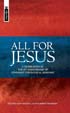 Another thing that happened at General Assembly was the official release of my other book, which I co-edited with Robert Peterson: All for Jesus: A Celebration of the 50th Anniversary of Covenant Theological Seminary (Christian Focus, 2006). Though copies have not yet arrived at Amazon, you can buy copies from the Covenant Seminary Bookstore.
One of the neat things about this book was its dual purpose. Not only was it an anniversary volume, but it also served as a festschrift for David Jones, Bob Vasholz, and David Calhoun. Each of these men have been associated with the Seminary for over 35 years and have shaped the insitution in profound ways. It seemed right to honor them in this way as they have honored us.
Among the essays in the book are:
- Here We Stand: Rooted in Grace for Reformation and Transformation, Bryan Chapell
- By His Grace, For His Glory: The Story of Covenant Theological Seminary, David B. Calhoun
- The Necessity of Preaching Grace for Progress in Sanctification, Bryan Chapell
- The Greatness of God’s Grace, Robert A. Peterson
- “But Where Sin Abounded, Grace Did Much More Abound”: Lessons From the Book of Genesis, Robert I. Vasholz
- The Great Commission as the Conclusion of Matthew’s Gospel, David W. Chapman
- Christ-Centered Eschatology in Acts 3:12b–26, Hans F. Bayer
- “What Is the Nature of True Religion?”: Religious Affections in its American Puritan Context, Sean Michael Lucas
- Christ-Centered Worship and the Regulative Principle, Mark L. Dalbey
- God Speaks as a Sage Sometimes: Moving Beyond the Merely Prophetic in Preaching, Zachary W. Eswine
- Systematic Theology as a Biblical Discipline, Michael Williams
- Christ-Centered Ethics, David Clyde Jones
- Christ-Centered Educational Ministry: An Overview of Frameworks and Practices, Donald Guthrie
- The Search for Truth in Psychology and Counseling, Richard Winter
- Grace-Shaped Counseling, Daniel W. Zink
- Christ-Centered Missions, J. Nelson Jennings
- Pastoral Learning After Seminary, Robert W. Burns
- Christianity and the Arts, Jerram Barrs
- Grace-Centered Church Planting, Philip D. Douglass
- What the Reader Wants and the Translator Can Give: 1 John as a Test Case, C. John Collins
- The Lord is Against Me!: A Sermon on the Book of Ruth, Jay Sklar
- To Know and Be Known: How Christ’s Love Moves Us Into Intimacy, Humility, and Risk: A Sermon on John 3:1–17, Greg Perry
Subscribe to:
Posts (Atom)