I'm back from traveling all over the Carolinas and thoroughly enjoyed my time away. Though it was a working vacation of sorts, we had such a good time being in the mountains (and escaping the hot and power-less St. Louis region). We thought that we had missed the worst of St. Louis summer, although today the high is supposed to be 102. In case you are wondering, that's hot.
On our way down to NC, we spent the first weekend in Nashville, which is about half way. On Saturday, we went to the Hermitage, the ancestral home of Andrew Jackson, our seventh president and good (well, I'm not sure how good he really was) Presbyterian. The best part was seeing the old Hermitage Presbyterian Church, which no longer hosts the active congregation (their new building sits across the field from the old one). But the church building was restored after a fire in the 1960s and is a wonderful example of early 19th century Presbyterian architecture--very simple, white-washed church building with pulpit and box-pews.
We spent our first week in Black Mountain, NC, nearly a stone's throw away from Montreat, the historic assembly grounds for the old southern Presbyterian church. We love to run over to Montreat, use their large playground, and walk up the creek that runs through the property. It was interesting going back into the bookstore there--though they carry a wide (and unusual) assortment of books, I was struck by all the ecumencial worship resources they had. It signaled to me a church that has lost any sense of what it means to be Presbyterian by looking to Roman Catholic and Celtic worship traditions, rather than the Presbyterian past.
The other big thing I did that first week (aside from going to waterfalls, Biltmore, and Mast General Store) was to drive down to Atlanta to do a day of training for RUF Campus Ministers. I count myself as one of RUF's biggest fans, firmly believing in their mission of caring for covenant children and reaching out to non-believing college studies on America's college campuses. I think their work is vital for the future health of the PCA and for church planting throughout our country. Our future ruling elders and pastors, godly men and women, are coming out of RUF. And so, it was a great joy to be with them, teaching them material on Presbyterian polity that draws from my recent book.
Monday, July 31, 2006

On Being Presbyterian: Free Church of Scotland Review
On Being Presbyterian was the book-of-the-month in July for the Free Church of Scotland! You can read Iain Campbell's gracious review here.
Friday, July 14, 2006
Away from blogging, again...
I'll be away from blogging from July 15 to July 30. We will be away in Black Mountain, NC, for vacation along with side-trips to Atlanta (for RUF Campus Ministers' Training), Colubmia, SC (for Thornwell Lectures at FPC Columbia), and then for a week at Ridge Haven.
Thursday, July 13, 2006
Someone call the cops...
...because Jim Bowden, former Cincinnati Reds GM and current Washington Nationals GM, just fleeced his former employeers in this trade.
How can you trade your starting rightfielder (age 26, who is finally healthy and is on pace to hit nearly 30 HRs and 100 RBI with nearly 40 doubles this year); shortstop (age 26, who made the All-Star game last year, and is on pace for almost 20 HRs--like last season--and 43 steals); and their 2004 no. 1 pick and not get Alfonsio Soriano in return?
Instead, they got a reliever with a 3.58 ERA and another reliever with a 3.91 ERA, a broken-down shortstop, and two other players who don't even have links on ESPN.com? This, unequivocally, is a bad trade for the Reds and will prove to be the start of the rebulding of that Washington club.
The other question is this--if Kearns was available, then why didn't the Cardinals make some sort of play for him? After all, he would fit in perfect in rightfield and Encarnarcion could be moved to leftfield.
[You may now return to your regularly scheduled theological, pastoral, and historical conversations...]
How can you trade your starting rightfielder (age 26, who is finally healthy and is on pace to hit nearly 30 HRs and 100 RBI with nearly 40 doubles this year); shortstop (age 26, who made the All-Star game last year, and is on pace for almost 20 HRs--like last season--and 43 steals); and their 2004 no. 1 pick and not get Alfonsio Soriano in return?
Instead, they got a reliever with a 3.58 ERA and another reliever with a 3.91 ERA, a broken-down shortstop, and two other players who don't even have links on ESPN.com? This, unequivocally, is a bad trade for the Reds and will prove to be the start of the rebulding of that Washington club.
The other question is this--if Kearns was available, then why didn't the Cardinals make some sort of play for him? After all, he would fit in perfect in rightfield and Encarnarcion could be moved to leftfield.
[You may now return to your regularly scheduled theological, pastoral, and historical conversations...]
The End of the Religious Right?
This article by Harvey Cox, long-time professor at Harvard Divinity School, in the Boston Globe was very interesting. Essentially, Cox suggests that the younger evangelical generation is both theologically conservative and politically liberal. As he notes, "Evangelical Protestants are becoming increasingly concerned about a wide range of issues-the Iraq War, the environment, torture, and poverty, for example-which put them at odds with much of the Bush agenda." As a result, he envisions (and hopes for) the coming end of the "antigay" "anti-abortion" Religous Right.
Cox may be right, although not for the reasons that he suggests. He belives that the reasons younger evangelicals are interested in traditionally "liberal" issues (enviornment, peace issues, poverty) is because they are paying more attention to what Jesus said: "The difference, one could argue, is that they are more concerned about actually following Jesus, who had much to say about violence and the poor, but said nothing about gays or a strong military, and who was put to death by torture."
I think the reason is actually more complex. It strikes me that a number of younger evangelicals are fed up with the cultural system called "evangelicalism," because it appears to identify certain issues as central to the Gospel which are actually not biblical or doctrinal issues at all. One great example of this was the lengthy debate that both the PCA and the OPC had over "women in combat." This issue because one of the dividing line issues for the Gospel, we were breathlessly told, because it represented a slippery slope--women in combat means weak men, which means feminism, which means male headship, inspiration of the Bible, and Christianity all fall like dominos. I think that most younger evangelicals just didn't (and don't) buy that.
The Iraq war is another example, for exactly the reasons that the Calvin College community suggested. The reality is that pre-emptive war (the Bush doctrine) can be found no where in just war theory and is not justified in most expositions of the Sixth Commandment. The way that most conservative evangelicals have supported President Bush and engaged in "Spread Eagle" patriotism leaves a younger generation cold--not because they necessarily disagree with Bush policy, but because it appears to link evangelical Christianity with Republican politics.
That doesn't mean, however, that younger evangelicals will be out in force for Hillary Clinton in 2008 for the simple reason that the Democrats continued to have such a strong pro-abortion lobby. Again, Sixth Commandment issues prevail here as they would on end of life issues, another weak point for the Democrats. Hence, the mass exodus to the Left that Cox and his colleagues long to see probably won't happen.
What will happen, though, is that younger evangelicals will probably be politically motivated over a wider range of issues than just abortion or tax cuts. Rather, they will demonstrate a critical independence that will make them a wild card in future national elections, looking for principles (and politicians) that agree with a broader sweep of biblical thinking.
[HT: SharperIron]
Cox may be right, although not for the reasons that he suggests. He belives that the reasons younger evangelicals are interested in traditionally "liberal" issues (enviornment, peace issues, poverty) is because they are paying more attention to what Jesus said: "The difference, one could argue, is that they are more concerned about actually following Jesus, who had much to say about violence and the poor, but said nothing about gays or a strong military, and who was put to death by torture."
I think the reason is actually more complex. It strikes me that a number of younger evangelicals are fed up with the cultural system called "evangelicalism," because it appears to identify certain issues as central to the Gospel which are actually not biblical or doctrinal issues at all. One great example of this was the lengthy debate that both the PCA and the OPC had over "women in combat." This issue because one of the dividing line issues for the Gospel, we were breathlessly told, because it represented a slippery slope--women in combat means weak men, which means feminism, which means male headship, inspiration of the Bible, and Christianity all fall like dominos. I think that most younger evangelicals just didn't (and don't) buy that.
The Iraq war is another example, for exactly the reasons that the Calvin College community suggested. The reality is that pre-emptive war (the Bush doctrine) can be found no where in just war theory and is not justified in most expositions of the Sixth Commandment. The way that most conservative evangelicals have supported President Bush and engaged in "Spread Eagle" patriotism leaves a younger generation cold--not because they necessarily disagree with Bush policy, but because it appears to link evangelical Christianity with Republican politics.
That doesn't mean, however, that younger evangelicals will be out in force for Hillary Clinton in 2008 for the simple reason that the Democrats continued to have such a strong pro-abortion lobby. Again, Sixth Commandment issues prevail here as they would on end of life issues, another weak point for the Democrats. Hence, the mass exodus to the Left that Cox and his colleagues long to see probably won't happen.
What will happen, though, is that younger evangelicals will probably be politically motivated over a wider range of issues than just abortion or tax cuts. Rather, they will demonstrate a critical independence that will make them a wild card in future national elections, looking for principles (and politicians) that agree with a broader sweep of biblical thinking.
[HT: SharperIron]
Wednesday, July 12, 2006
All-Star Game Observations
- Is it any surprise that a team managed by Phil Garner blew the lead with two outs in the 9th inning? Since when did Trevor Hoffman become Brad Lidge?
- Is anyone else bugged by the way the media fawned over David Wright? He is a very good player, probably the 2nd best third baseman in the game. But if you are a Baseball Prospectus person at all, and if you run his first two seasons against the best third baseman in the game (Scott Rolen), what you'd find is this:
Wright
Age 22, .306 BA, .388 OBP, .523 SLG, .911 OBP+SLG, 9.1 WARP
Age 23, .316 BA, .386 OBP, .575 SLG, .961 OBP+SLG, 7.0 WARP (projected to 162 games)
Rolen
Age 22, .283 BA, .377 OBP, .469 SLG, .846 OBP+SLG, 8.9 WARP
Age 23, .290 BA, .391 OBP, .532 SLG, .923 OBP+SLG, 11.2 WARP
For those tempted to say, "so what?" or "those numbers are nearly equal," you have to come back with the fact that Wright has played on better teams his first two seasons compared to Rolen. Rolen had little protection in the line-ups of the 97 and 98 Phillies and still put up strong numbers. Plus, Rolen won the Rookie of the Year award in 1997; he also won his first of six Gold Glove awards in 1998 (when he was 23).
What does this mean? I think it means that the media fawns over players like Wright (and ignores players like Rolen) because of their New York bias. It is the same reason SportsCenter led with Yankee-Devil Ray highlights this past weekend, rather than Cards-Astros. If I think about it some times, it drives me nuts. Thankfully, I don't think about it often.
- Another thing--if the NL had won the game, then Carlos Beltran (not David Wright) clearly was the MVP.
- Coupled with that, what was Garner thinking putting Miguel Cabrera in as Wright's replacement instead of Rolen? Cabrera is so poor defensively; I think Rolen would have gotten Konerko's hit that started the rally in the 9th inning because he would not have been standing directly on top of the line (in the no-doubles defense).
- Maybe it is just me--but I like Ozzie Guillen. I don't like what he does or says sometimes, but I like the way he manages games and engages his players. He never seems to forget it is a game--which means play hard, but have fun.
Tuesday, July 11, 2006
Follow Up: The Unavoidable Issue
Some of the commentors on this post doubted whether I was right to suggest that Baptist theology is inherently sectarian. I think this brother's post (as well as the comments) demonstrates my basic contention. He strongly claims that "any believer who has not been baptized upon profession of faith in Jesus as Savior and Lord is failing to obey the authorative instruction of the Lord Christ and follow the apostolic pattern."
Really? Exactly which text from the Gospels demands baptism upon profession of faith? As this dear brother must know, Matthew 28:19-20 has the imperative, "Make disciples," followed by two participles, "baptizing" and "teaching." I would take those two participles as explaining how one makes disciples, which would suggest the exact opposite pattern than he suggests (that is, one becomes a disciple as one is baptized and then instructed).
Exactly which apostolic pattern? The pattern of the Ethopian (Acts 8) and Saul (Acts 9)? The pattern of Lydia and her household and the jailer and his (Acts 16)? Perhaps the Ephesian disciples who were rebaptized after giving no profession of faith and then spoke in tongues (Acts 19)? I know there are Baptist arguments to deal with all of these texts; still, it strikes me that "the authorative instruction of the Lord Christ and the apostolic pattern" is by no means clear-cut. To claim boldly this as one's standard for cutting off Presbyterian sisters and brothers strikes me as shaky and potentially dangerous.
Not only this, but to say that "we alone have the true baptism"--baptism by immersion upon profession of faith--and others who were baptized in the Trinitarian formula by an ordained minister are not baptized is to cut off the majority of the visible church around the world. And this is the heart of sectarianism. It runs against the apostolic affirmation that "there is one body and one Spirit--just as you were called to one hope when you were called--one Lord, one faith, one baptism; one God and Father of all, who is over all and through all and in all" (Ephesians 4:4-6). What is important is that God identifies us with himself and with God's visible people in our baptisms, not whether it was by immersion after a spiritual awakening.
Perhaps this divisiveness over baptism was why Paul exclaimed: "Is Christ divided? Was Paul crucified for you? Where you baptized into the name of Paul? I am thankful that I did not baptized any of you except Crispus and Gaius, so that no one can say that you were baptized into my name" (1 Corinthians 1:13-15). To be baptized as a Baptist (and for some, baptized by a Baptist who was himself baptized by a Baptist) is less important than being baptized, identified with God's own people and granted the sign and seal of God's gospel promise. And this is the case especially for the household of Stephanus, and other households like his (1 Corinthians 1:16).
Really? Exactly which text from the Gospels demands baptism upon profession of faith? As this dear brother must know, Matthew 28:19-20 has the imperative, "Make disciples," followed by two participles, "baptizing" and "teaching." I would take those two participles as explaining how one makes disciples, which would suggest the exact opposite pattern than he suggests (that is, one becomes a disciple as one is baptized and then instructed).
Exactly which apostolic pattern? The pattern of the Ethopian (Acts 8) and Saul (Acts 9)? The pattern of Lydia and her household and the jailer and his (Acts 16)? Perhaps the Ephesian disciples who were rebaptized after giving no profession of faith and then spoke in tongues (Acts 19)? I know there are Baptist arguments to deal with all of these texts; still, it strikes me that "the authorative instruction of the Lord Christ and the apostolic pattern" is by no means clear-cut. To claim boldly this as one's standard for cutting off Presbyterian sisters and brothers strikes me as shaky and potentially dangerous.
Not only this, but to say that "we alone have the true baptism"--baptism by immersion upon profession of faith--and others who were baptized in the Trinitarian formula by an ordained minister are not baptized is to cut off the majority of the visible church around the world. And this is the heart of sectarianism. It runs against the apostolic affirmation that "there is one body and one Spirit--just as you were called to one hope when you were called--one Lord, one faith, one baptism; one God and Father of all, who is over all and through all and in all" (Ephesians 4:4-6). What is important is that God identifies us with himself and with God's visible people in our baptisms, not whether it was by immersion after a spiritual awakening.
Perhaps this divisiveness over baptism was why Paul exclaimed: "Is Christ divided? Was Paul crucified for you? Where you baptized into the name of Paul? I am thankful that I did not baptized any of you except Crispus and Gaius, so that no one can say that you were baptized into my name" (1 Corinthians 1:13-15). To be baptized as a Baptist (and for some, baptized by a Baptist who was himself baptized by a Baptist) is less important than being baptized, identified with God's own people and granted the sign and seal of God's gospel promise. And this is the case especially for the household of Stephanus, and other households like his (1 Corinthians 1:16).
Monday, July 10, 2006
Blogging Pastors
The Washington Post had this fascinating article about "blogging pastors." It is striking to me, having worked in both retail and education, how the Internet cooperates hand-in-hand with "brick-and-mortar" establishments, whether bookstores, seminaries, or churches. It is also striking to me how few mainline Protestants understand (or care to understand) the importance of technology in our present age (as evidence by the fact that so few of them are mentioned in the article and are actively engaged in the blog/internet world).
One illustration of this came to me a couple of weeks ago. I attended the Association of Theological Schools Biennium and went to a seminar on incorporating technology into the seminary curriculum. The presenter was good, although his overview only highlighted the most basic technological incorporation--PowerPoint, CMap, use of Internet resources. However, several of the mainline Protestant deans and presidents kept asking whether their seminaries really needed to invest in technology--"was this the way things were and going to be or simply a current fad that is optional?"
Think about that for a minute--that would have been like the Catholics at the beginning of the Reformation saying, "This printing press thing--do we really need to use it or is it optional?" This amazing reluctance to utilize technology--even to supplement their ministries--is yet another reason why mainline Protestantism is dying.
One last thing on all this--even with evangelical Protestants recognition that various forms of e-media are important for supplementing ministry--another striking thing is how poor most church websites really are. At Covenant Presbyterian Church, we looked at a number of websites before redesigning ours and there were very, very few that could serve as a model. I don't understand how people can spend so much money on facitilites, advertising, and other things that are meant to present a "face" to one's church and fail to spend good money on web communications.
[HT: SharperIron]
One illustration of this came to me a couple of weeks ago. I attended the Association of Theological Schools Biennium and went to a seminar on incorporating technology into the seminary curriculum. The presenter was good, although his overview only highlighted the most basic technological incorporation--PowerPoint, CMap, use of Internet resources. However, several of the mainline Protestant deans and presidents kept asking whether their seminaries really needed to invest in technology--"was this the way things were and going to be or simply a current fad that is optional?"
Think about that for a minute--that would have been like the Catholics at the beginning of the Reformation saying, "This printing press thing--do we really need to use it or is it optional?" This amazing reluctance to utilize technology--even to supplement their ministries--is yet another reason why mainline Protestantism is dying.
One last thing on all this--even with evangelical Protestants recognition that various forms of e-media are important for supplementing ministry--another striking thing is how poor most church websites really are. At Covenant Presbyterian Church, we looked at a number of websites before redesigning ours and there were very, very few that could serve as a model. I don't understand how people can spend so much money on facitilites, advertising, and other things that are meant to present a "face" to one's church and fail to spend good money on web communications.
[HT: SharperIron]
Hope in the Midst of a Hostile World
Over the summer, I've been preparing for a fall preaching series on Daniel at Covenant Presbyterian Church, where I serve as an assistant pastor. One of the more helpful things I've read is the new book, Hope in the Midst of a Hostile World, by George Schwab, associate professor of OT at Erskine Seminary.
This book is the newest installment in the "Gospel According to the OT" series, edited by Tremper Longman and Al Groves. Unlike some of the other volumes, which tend to feel like sermonic material, this volume seems more techinical in orientation. Still, there is a wealth of helpful material here. Particularly useful was the first part, which made the case for reading Daniel as one book containing apocalyptic material that meant to convey wisdom to Israel in its exilic condition. Also useful were Schwab's demonstration that the main focus of the book was the hope granted to God's people by the recognition of his sovereignty, even over the Babylonians; his overview of Daniel 2-7, seeing this Aramaic section as a coherent whole; and his discussion of the various interpretative possibilities for Daniel 9:24-27.
While this book does not replace (nor was it meant to replace) the need for solid commentaries on Daniel, I found this a helpful and useful book that covered key issues in a winsome writing style, all under 180 pages.
This book is the newest installment in the "Gospel According to the OT" series, edited by Tremper Longman and Al Groves. Unlike some of the other volumes, which tend to feel like sermonic material, this volume seems more techinical in orientation. Still, there is a wealth of helpful material here. Particularly useful was the first part, which made the case for reading Daniel as one book containing apocalyptic material that meant to convey wisdom to Israel in its exilic condition. Also useful were Schwab's demonstration that the main focus of the book was the hope granted to God's people by the recognition of his sovereignty, even over the Babylonians; his overview of Daniel 2-7, seeing this Aramaic section as a coherent whole; and his discussion of the various interpretative possibilities for Daniel 9:24-27.
While this book does not replace (nor was it meant to replace) the need for solid commentaries on Daniel, I found this a helpful and useful book that covered key issues in a winsome writing style, all under 180 pages.
Friday, July 07, 2006
Slander
One of the most common charges across the blogosphere, regardless of the theological conversation or Protestant denomination, is "slander." Generally, if the one making the claim has any knowledge of the ten commandments, there is also a reference to the 9th commandment as well. Yet it is not clear to me that "slander" is the proper charge to be making.
First, according to Dictionary.com, slander is "oral communication of false statements injurious to a person's reputation" and "a false and malicious statement or report about someone." Since most of the exhibits of "slander" are in written form (books, presbytery reports, articles, websites), wouldn't the proper accusation be "libel"?
Next, both slander and libel have to do with injury to an individual's reputation. Generally, there has to be a malicious intent in order to be libelous; that is, someone has to be seeking to ruin another person knowingly by willfully distributing false statements. However, in current theological conversations, in which certain individuals publish things and then other individuals read those things, criticize them, and draw conclusions, it is not clear to me at all that what is going on meets the standard of libel.
As a historian who deals with written texts all the time and who has to connect various texts together into a pattern in order to offer an interpretation, I recognize that my interpretation of certain texts may be open to criticism. For example, not everyone has been pleased with my understanding of Robert Lewis Dabney's failures during the Civil War; it was my attempt to probe why Dabney only served five months during the war and why he was so bitter at the end. To accuse me of "libel," though, would be ridiculous; I tried to interpret the evidence to the best of my ability and if I failed, then so be it. Others can come along behind me, offer a different interpretation that corrects mine, note in their footnotes how Lucas blew it. That's part of the process; I'm not offended by it.
Another thing along this line: I'm not certain that interpreters of texts have the responsibility to engage in dialogue with the author of those texts if they feel they understand the materials adequately. I've wrestled with this myself as I've worked on my current historical project, which focuses on those leaders who fought liberalism in the old PCUS and who helped to form the PCA. The questions of whether to use oral history and whether to allow certain key players the opportunity to read drafts have come to my mind. I have decided not to do so, but rather rely on my own interpretation of the written record (which includes both published and archival materials). It may open me up to criticism when my work is published; however, I wanted to protect others and give them the opportunity to object to my understanding when they have the chance to read and engage my work.
By extension, I don't believe that it is necessarily incumbent for current theological analysts to engage with others when they are examining "the public record," if you will. Especially in some of the theological conversations going on currently in Baptist and Presbyterian denominations, it strikes me that dialogues over written words can inevitably devolve in ways that are simply not helpful.
In addition, I think there has to be a recognition that when one goes into print, it is inevitable that people will misunderstand things that you've written; they won't pick up on nuances in your argument; they will focus on niggling issues and miss the larger point. It is inevitable. If they fail to get it, others will compare the original materials and the critic's understanding of those things and make a determination: did the critic really understand the author? There is also the inevitability of peer review; when you put material out there for others to read, there will be disagreement and sometimes it will be strong disagreement. It is one of the more painful issues that I've faced when I've written book reviews; most of us do not like to review things negatively, but sometimes negative reviews must be written. But that is part of the bargain of going into print.
Finally, I do believe that the 9th commandment is at stake in these issues, but it is striking how quickly the Presbyterians Together document (and the 9th commandment itself) has been forgotten in these times. Just as a refresher, the Westminster Larger Catechism talks about the 9th Commandment this way:
Part of this has to be a more winsome approach to theological discourse than is currently being employed on the internet and other venues (e.g. one critique of a critique warned that the original critic was going to face "God's harshest judgment"; that strikes me as a little strong). Part of this is a recognition that most individuals seeking the truth, especially those who go through some sort of peer review process, generally are not trying to be malacious and are trying to understand others, even when they may disagree in the strongest possible terms.
Above all, it strikes me that the proper response when we feel that we've been misunderstood is not fire and brimstone and not accusations of libel (or slander, for that matter). Rather, a gracious correction and a hopeful engagement strike me as a better path. Even more, such also represents our better affirmations and the better angels of our (redeemed) natures.
First, according to Dictionary.com, slander is "oral communication of false statements injurious to a person's reputation" and "a false and malicious statement or report about someone." Since most of the exhibits of "slander" are in written form (books, presbytery reports, articles, websites), wouldn't the proper accusation be "libel"?
Next, both slander and libel have to do with injury to an individual's reputation. Generally, there has to be a malicious intent in order to be libelous; that is, someone has to be seeking to ruin another person knowingly by willfully distributing false statements. However, in current theological conversations, in which certain individuals publish things and then other individuals read those things, criticize them, and draw conclusions, it is not clear to me at all that what is going on meets the standard of libel.
As a historian who deals with written texts all the time and who has to connect various texts together into a pattern in order to offer an interpretation, I recognize that my interpretation of certain texts may be open to criticism. For example, not everyone has been pleased with my understanding of Robert Lewis Dabney's failures during the Civil War; it was my attempt to probe why Dabney only served five months during the war and why he was so bitter at the end. To accuse me of "libel," though, would be ridiculous; I tried to interpret the evidence to the best of my ability and if I failed, then so be it. Others can come along behind me, offer a different interpretation that corrects mine, note in their footnotes how Lucas blew it. That's part of the process; I'm not offended by it.
Another thing along this line: I'm not certain that interpreters of texts have the responsibility to engage in dialogue with the author of those texts if they feel they understand the materials adequately. I've wrestled with this myself as I've worked on my current historical project, which focuses on those leaders who fought liberalism in the old PCUS and who helped to form the PCA. The questions of whether to use oral history and whether to allow certain key players the opportunity to read drafts have come to my mind. I have decided not to do so, but rather rely on my own interpretation of the written record (which includes both published and archival materials). It may open me up to criticism when my work is published; however, I wanted to protect others and give them the opportunity to object to my understanding when they have the chance to read and engage my work.
By extension, I don't believe that it is necessarily incumbent for current theological analysts to engage with others when they are examining "the public record," if you will. Especially in some of the theological conversations going on currently in Baptist and Presbyterian denominations, it strikes me that dialogues over written words can inevitably devolve in ways that are simply not helpful.
In addition, I think there has to be a recognition that when one goes into print, it is inevitable that people will misunderstand things that you've written; they won't pick up on nuances in your argument; they will focus on niggling issues and miss the larger point. It is inevitable. If they fail to get it, others will compare the original materials and the critic's understanding of those things and make a determination: did the critic really understand the author? There is also the inevitability of peer review; when you put material out there for others to read, there will be disagreement and sometimes it will be strong disagreement. It is one of the more painful issues that I've faced when I've written book reviews; most of us do not like to review things negatively, but sometimes negative reviews must be written. But that is part of the bargain of going into print.
Finally, I do believe that the 9th commandment is at stake in these issues, but it is striking how quickly the Presbyterians Together document (and the 9th commandment itself) has been forgotten in these times. Just as a refresher, the Westminster Larger Catechism talks about the 9th Commandment this way:
Surely there is enough sin here in the 9th Commandment for all to share; I certainly can think of times when I've misrepresented others, when I've engaged in scornful contempt, and other like sins. But there are also duties in the 9th Commandment as well--the duty to seek the truth as well as the good of a brother's name. What makes this so complicated in this matter is when other brothers appear to be pushing the theological envelope. How does one seek the truth as well as the good of a brother's name when he is worried that the brother is in error? How does one engage in theological dialogue (and even polemics) in a gracious and Christ-centered way?Q. 144. What are the duties required in the ninth commandment?
A. The duties required in the ninth commandment are, the preserving and promoting of truth between man and man, and the good name of our neighbor, as well as our own; appearing and standing for the truth; and from the heart, sincerely, freely, clearly, and fully, speaking the truth, and only the truth, in matters of judgment and justice, and in all other things whatsoever; a charitable esteem of our neighbors; loving, desiring, and rejoicing in their good name; sorrowing for and covering of their infirmities; freely acknowledging of their gifts and graces, defending their innocency; a ready receiving of a good report, and unwillingness to admit of an evil report, concerning them; discouraging talebearers, flatterers, and slanderers; love and care of our own good name, and defending it when need requireth; keeping of lawful promises; studying and practicing of whatsoever things are true, honest, lovely, and of good report.Q. 145. What are the sins forbidden in the ninth commandment?
A. The sins forbidden in the ninth commandment are, all prejudicing the truth, and the good name of our neighbors, as well as our own, especially in public judicature; giving false evidence, suborning false witnesses, wittingly appearing and pleading for an evil cause, outfacing and overbearing the truth; passing unjust sentence, calling evil good, and good evil; rewarding the wicked according to the work of the righteous, and the righteous according to the work of the wicked; forgery, concealing the truth, undue silence in a just cause, and holding our peace when iniquity calleth for either a reproof from ourselves, or complaint to others; speaking the truth unseasonably, or maliciously to a wrong end, or perverting it to a wrong meaning, or in doubtful or equivocal expressions, to the prejudice of the truth or justice; speaking untruth, lying, slandering, backbiting, detracting, talebearing, whispering, scoffing, reviling, rash, harsh, and partial censuring; misconstructing intentions, words, and actions; flattering, vainglorious boasting, thinking or speaking too highly or too meanly of ourselves or others; denying the gifts and graces of God; aggravating smaller faults; hiding, excusing, or extenuating of sins, when called to a free confession; unnecessary discovering of infirmities; raising false rumors, receiving and countenancing evil reports, and stopping our ears against just defense; evil suspicion; envying or grieving at the deserved credit of any; endeavoring or desiring to impair it, rejoicing in their disgrace and infamy; scornful contempt, fond admiration; breach of lawful promises; neglecting such things as are of good report, and practicing, or not avoiding ourselves, or not hindering what we can in others, such things as procure an ill
name.
Part of this has to be a more winsome approach to theological discourse than is currently being employed on the internet and other venues (e.g. one critique of a critique warned that the original critic was going to face "God's harshest judgment"; that strikes me as a little strong). Part of this is a recognition that most individuals seeking the truth, especially those who go through some sort of peer review process, generally are not trying to be malacious and are trying to understand others, even when they may disagree in the strongest possible terms.
Above all, it strikes me that the proper response when we feel that we've been misunderstood is not fire and brimstone and not accusations of libel (or slander, for that matter). Rather, a gracious correction and a hopeful engagement strike me as a better path. Even more, such also represents our better affirmations and the better angels of our (redeemed) natures.
On Being Presbyterian: Challies Review
Here was a generous review of On Being Presbyterian. The reviewer is Tim Challies, who may be known to some of you for his live-blogging of the Together for the Gospel conference a few months ago. Though he was raised Presbyterian and now is a Baptist, I thought his overview and conclusion was gracious.
Thursday, July 06, 2006
Getting the Gospel Right
Most people in conservative Presbyterian and Reformed churches know that there is some movement out there called the "New Perspective(s) on Paul," but have neither the academic background nor inclination to wade through all the specialized studies in order to sort the matters out. That is why Cornelis P. Venema's little book, Getting the Gospel Right, is so useful. Venema, president of Mid-America Reformed Seminary, provides a brief, lay-oriented summary of the issues that highlights both the distinctive teaching of leading three leading NT scholars associated with the "New Perspective(s)" (E. P. Sanders, James Dunn, and N. T. Wright). He also brings solid criticisms to bear against the New Perspective(s). While some may wish for more detailed exegetical engagement, that is not the purpose of this little book. Rather, it will serve as a means for alerting church elders and deacons and other interested laypeople of the key teaching of an influential academic movement. As such, it is highly recommended.
Wednesday, July 05, 2006
On Being Presbyterian: Reformation 21 Review
Here is a very generous review of On Being Presbyterian at the Reformation21 website. I was particularly gratified by Dr. Gleason's decision to give the book to his graduating high school seniors.
Thursday, June 29, 2006
Growing Up Protestant
[Note: this was a review that was published in Modern Reformation in the November/December 2002 issue. I still am surprised that few people know about this book; Peggy Bendroth is a wonderful scholar and the story she tells (I believe) demonstrates the difficulties of the Bushnellian approach to Christian nurture.]
In Growing Up Protestant, Margaret Lamberts Bendorth offered a fascinating account of northern mainline Protestant attitudes about families and children in the nineteenth and twentieth centuries. Bendroth, professor of history at Calvin College, began her account with the domestication of the family in the North in the mid-nineteenth century. As programs of catechesis were replaced by Sunday school programs influenced by Horace Bushnell’s Christian Nature and the later educational insights of John Dewey, mainline Protestants shifted their attention from training their children in the doctrines of the faith to developing their personalities to meet the demands of modern life.
Concomitant with this shift in religious training goals was the Protestant exaltation of the family as the chief institution ordained by God for the salvation of children, which in turn led to the denigration of the church and its ministry of Word and sacrament as means of grace. By the 1930s, however, ecclesiastical experts influenced by social science and psychology became convinced that parental nurture would not achieve the goal of psychological adjustment to modernity; in response, denominational elites developed a plethora of educational programs, light on doctrine but heavy on moralism, designed to replaced family nurture as the chief influence in the child’s “salvation.” But parents failed to heed the denominational bureaucrats—instead, they increasingly allowed their children to abandon the church in the 1950s and 1960s, following the dictates of pop psychologists rather than the instructions of the denominational experts. The net result was the increasing absence of theological awareness in the mainline church as well as the rapid decline of attendance over the past thirty years.
Though she did not draw out the moral of the story, Bendroth’s account pointed to the mainline church’s failure to prioritize doctrinal understanding and ecclesiastical centrality as the chief culprits for its decline. As a result, this book raises several issues for contemporary reflection, especially for Reformed evangelicals seeking to pass on the faith to their children.
First, what is the relation of the household to the church? While some evangelicals are drawn to a home-based mentality where the household is school and church as well as family, Bendroth’s work suggests that evangelicals need to be careful here. While the visible church is certainly made up of household heads and their children, still the church does have a disciplinary role in the life of the family; elders work with and through household heads in order to discipline non-communing members. In short, while the family is the basic integer of the church, the church still has priority over the family because Christ has given the keys of the kingdom as well as the administration of Word and sacrament to the church, not to individual families.
A second question is, how should Christian parents nurture their children and pass on the faith to them? Bendroth’s work should give encouragement to the recent revival of catechesis, represented in the recent publication of books such as Starr Meade’s Training Hearts, Teaching Minds (P&R, 2000), Donald Van Dyken’s Rediscovering Catechism (P&R, 2000), and Tom J. Nettles’s Teaching Truth, Training Hearts (Calvary Press, 1998). If the downfall of the mainline was due to lack of the doctrinal instruction of the young, then contemporary Reformed evangelicals should heed the lesson and ensure that their church’s educational programs emphasize not simply biblical knowledge, but theological knowledge as well—mental furniture that will help young minds conceptualize the depths of their sinfulness and the wonders of the Redeemer and his salvation.
In all, Growing Up Protestant is an intellectually satisfying and compelling book. Full of insight and nuance, Bendroth both demonstrates the failures of past reflection on family worship and subtlely urges contemporary believers toward the recovery of older ways of raising their children in the “nurture and admonition of the Lord.”
In Growing Up Protestant, Margaret Lamberts Bendorth offered a fascinating account of northern mainline Protestant attitudes about families and children in the nineteenth and twentieth centuries. Bendroth, professor of history at Calvin College, began her account with the domestication of the family in the North in the mid-nineteenth century. As programs of catechesis were replaced by Sunday school programs influenced by Horace Bushnell’s Christian Nature and the later educational insights of John Dewey, mainline Protestants shifted their attention from training their children in the doctrines of the faith to developing their personalities to meet the demands of modern life.
Concomitant with this shift in religious training goals was the Protestant exaltation of the family as the chief institution ordained by God for the salvation of children, which in turn led to the denigration of the church and its ministry of Word and sacrament as means of grace. By the 1930s, however, ecclesiastical experts influenced by social science and psychology became convinced that parental nurture would not achieve the goal of psychological adjustment to modernity; in response, denominational elites developed a plethora of educational programs, light on doctrine but heavy on moralism, designed to replaced family nurture as the chief influence in the child’s “salvation.” But parents failed to heed the denominational bureaucrats—instead, they increasingly allowed their children to abandon the church in the 1950s and 1960s, following the dictates of pop psychologists rather than the instructions of the denominational experts. The net result was the increasing absence of theological awareness in the mainline church as well as the rapid decline of attendance over the past thirty years.
Though she did not draw out the moral of the story, Bendroth’s account pointed to the mainline church’s failure to prioritize doctrinal understanding and ecclesiastical centrality as the chief culprits for its decline. As a result, this book raises several issues for contemporary reflection, especially for Reformed evangelicals seeking to pass on the faith to their children.
First, what is the relation of the household to the church? While some evangelicals are drawn to a home-based mentality where the household is school and church as well as family, Bendroth’s work suggests that evangelicals need to be careful here. While the visible church is certainly made up of household heads and their children, still the church does have a disciplinary role in the life of the family; elders work with and through household heads in order to discipline non-communing members. In short, while the family is the basic integer of the church, the church still has priority over the family because Christ has given the keys of the kingdom as well as the administration of Word and sacrament to the church, not to individual families.
A second question is, how should Christian parents nurture their children and pass on the faith to them? Bendroth’s work should give encouragement to the recent revival of catechesis, represented in the recent publication of books such as Starr Meade’s Training Hearts, Teaching Minds (P&R, 2000), Donald Van Dyken’s Rediscovering Catechism (P&R, 2000), and Tom J. Nettles’s Teaching Truth, Training Hearts (Calvary Press, 1998). If the downfall of the mainline was due to lack of the doctrinal instruction of the young, then contemporary Reformed evangelicals should heed the lesson and ensure that their church’s educational programs emphasize not simply biblical knowledge, but theological knowledge as well—mental furniture that will help young minds conceptualize the depths of their sinfulness and the wonders of the Redeemer and his salvation.
In all, Growing Up Protestant is an intellectually satisfying and compelling book. Full of insight and nuance, Bendroth both demonstrates the failures of past reflection on family worship and subtlely urges contemporary believers toward the recovery of older ways of raising their children in the “nurture and admonition of the Lord.”
Wednesday, June 28, 2006
The Unavoidable Issue: Ecclesiology
I've posted on this before, but it is interesting to see how my Baptist brothers have continued efforts at re-tribalization in the aftermath of the SBC a few weeks ago. Part of this is the result of the failure of a resolution proposed by Tom Ascol (pastor, Grace Baptist Church, Cape Coral, FL), which essentially demanded that SBC churches remove non-active members from their rolls and bring integrity to their claims for a "regenerate church membership." This resolution never made it to the floor, having been rejected by the Resolutions Committee and then not receiving the necessary 2/3 vote on the floor to reconsider it.
As a result, some of my brothers have been blogging about the need for a regenerate church membership and restrict membership to those who have been "scripturally" baptized (i.e. "believer's baptism"). While I affirm that these are historically part of what it means to be Baptist (as Al Mohler rightly points out), these two issues were also a major reasons why I could no longer remain Baptist. Simply put, in my mind, Baptist ecclesiology is inherently sectarian (and that is not a good thing). Let me say also that, thankfully, most Baptists' hearts trump their doctrinal claims on this matter and they end up loving Presbyterians anyway.
For me, it was the ideal of regenerate church membership that broke down first. Being someone who specialized academically in American religious history and who has done work on Jonathan Edwards, I came to be convinced that it was impossible to peer into someone's heart to determine whether or not he was regenerate. All one could do was judge the "fruit" that accompanied his profession; and sometimes the professions are illegitimate. And if you have illegitimate professions of faith, that means you have hypocrites accounted as true members of the visible church. And if that is the case, then that means the visible church is a mixed body of believers and unbelievers (posing as believers). The end result was this: the Baptist claim for regenerate church membership was an attempt to make the visible church into the church that God alone can see (which is "regenerate" because it consists of the elect through time and space). Since this is clearly impossible (as the 1689 London Baptist Confession itself confessed), it is not an ideal that is biblically demanded for the local, visible church.
Once that principle fell, I was freed to think about the visible church in the way that I see it on Sunday morning (as well as the way I see it in the Bible): as professing believers and their children, who are set apart, holy, for God's purposes in their lives (1 Cor. 7:14). And since these children are admitted as part of God's visible people, they should receive the sign of entrance into that people, which in the OT was circumcision (Gen. 17) but in the NT is baptism (Acts 2:38, 39; Col. 2:11). God's purpose has always been for entire households to be identified with God's visible people (Gen. 17; Acts 16). The upshot here is that these two understandings--the visible church consists of believing households and the sign of admittance into the visible church should be applied to the entire household as a result of the household head's profession--made Baptist ecclesiology impossible for me. And so, I joined the Presbyterian church.
Now the reason Baptist ecclesiology is essentially sectarian is this: Baptists claim that they alone have genuine baptism because they alone "scripturally" baptize; hence, they alone represent the "true" (i.e. biblical) church. They claim this even though for at least 1850 years, there have been those who disagree with their claims abut baptism. They claim this even though most of the theological giants of the Christian tradition were baptized as infants (by sprinkling or pouring, but that is another matter). And so, with this claim (even though they don't want to do so), they essentially unchurch the majority of the Christian tradition. That represents the basic sectarian position--and as someone who studies the Christian tradition, this seemed to me to be an untenable claim.
Thankfully, as I've already said, most Baptists don't act on their basic principles and live out this sectarian position (although I am always concerned to see my friends defending Landmarkism, which would lead to real sectarianism). But the big reason why I became Presbyterian was that the doctrine of the church seemed to open the doors of the church as wide as Christ himself does--all those who believe in Jesus Christ for salvation and who are baptized in line with Matthew 28:19-20 (which only requires a Trinitarian baptism) are my brothers and sisters in Christ. This affirms the larger body of Christ (John 17:21) and seems to me to represent the best (and most biblical) position. It also allows me to affirm my Baptist friends as brothers in Christ (and even invite them into my pulpit), even if they might look a little sideways at me.
As a result, some of my brothers have been blogging about the need for a regenerate church membership and restrict membership to those who have been "scripturally" baptized (i.e. "believer's baptism"). While I affirm that these are historically part of what it means to be Baptist (as Al Mohler rightly points out), these two issues were also a major reasons why I could no longer remain Baptist. Simply put, in my mind, Baptist ecclesiology is inherently sectarian (and that is not a good thing). Let me say also that, thankfully, most Baptists' hearts trump their doctrinal claims on this matter and they end up loving Presbyterians anyway.
For me, it was the ideal of regenerate church membership that broke down first. Being someone who specialized academically in American religious history and who has done work on Jonathan Edwards, I came to be convinced that it was impossible to peer into someone's heart to determine whether or not he was regenerate. All one could do was judge the "fruit" that accompanied his profession; and sometimes the professions are illegitimate. And if you have illegitimate professions of faith, that means you have hypocrites accounted as true members of the visible church. And if that is the case, then that means the visible church is a mixed body of believers and unbelievers (posing as believers). The end result was this: the Baptist claim for regenerate church membership was an attempt to make the visible church into the church that God alone can see (which is "regenerate" because it consists of the elect through time and space). Since this is clearly impossible (as the 1689 London Baptist Confession itself confessed), it is not an ideal that is biblically demanded for the local, visible church.
Once that principle fell, I was freed to think about the visible church in the way that I see it on Sunday morning (as well as the way I see it in the Bible): as professing believers and their children, who are set apart, holy, for God's purposes in their lives (1 Cor. 7:14). And since these children are admitted as part of God's visible people, they should receive the sign of entrance into that people, which in the OT was circumcision (Gen. 17) but in the NT is baptism (Acts 2:38, 39; Col. 2:11). God's purpose has always been for entire households to be identified with God's visible people (Gen. 17; Acts 16). The upshot here is that these two understandings--the visible church consists of believing households and the sign of admittance into the visible church should be applied to the entire household as a result of the household head's profession--made Baptist ecclesiology impossible for me. And so, I joined the Presbyterian church.
Now the reason Baptist ecclesiology is essentially sectarian is this: Baptists claim that they alone have genuine baptism because they alone "scripturally" baptize; hence, they alone represent the "true" (i.e. biblical) church. They claim this even though for at least 1850 years, there have been those who disagree with their claims abut baptism. They claim this even though most of the theological giants of the Christian tradition were baptized as infants (by sprinkling or pouring, but that is another matter). And so, with this claim (even though they don't want to do so), they essentially unchurch the majority of the Christian tradition. That represents the basic sectarian position--and as someone who studies the Christian tradition, this seemed to me to be an untenable claim.
Thankfully, as I've already said, most Baptists don't act on their basic principles and live out this sectarian position (although I am always concerned to see my friends defending Landmarkism, which would lead to real sectarianism). But the big reason why I became Presbyterian was that the doctrine of the church seemed to open the doors of the church as wide as Christ himself does--all those who believe in Jesus Christ for salvation and who are baptized in line with Matthew 28:19-20 (which only requires a Trinitarian baptism) are my brothers and sisters in Christ. This affirms the larger body of Christ (John 17:21) and seems to me to represent the best (and most biblical) position. It also allows me to affirm my Baptist friends as brothers in Christ (and even invite them into my pulpit), even if they might look a little sideways at me.
Tuesday, June 27, 2006
All for Jesus
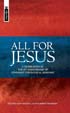 Another thing that happened at General Assembly was the official release of my other book, which I co-edited with Robert Peterson: All for Jesus: A Celebration of the 50th Anniversary of Covenant Theological Seminary (Christian Focus, 2006). Though copies have not yet arrived at Amazon, you can buy copies from the Covenant Seminary Bookstore.
One of the neat things about this book was its dual purpose. Not only was it an anniversary volume, but it also served as a festschrift for David Jones, Bob Vasholz, and David Calhoun. Each of these men have been associated with the Seminary for over 35 years and have shaped the insitution in profound ways. It seemed right to honor them in this way as they have honored us.
Among the essays in the book are:
- Here We Stand: Rooted in Grace for Reformation and Transformation, Bryan Chapell
- By His Grace, For His Glory: The Story of Covenant Theological Seminary, David B. Calhoun
- The Necessity of Preaching Grace for Progress in Sanctification, Bryan Chapell
- The Greatness of God’s Grace, Robert A. Peterson
- “But Where Sin Abounded, Grace Did Much More Abound”: Lessons From the Book of Genesis, Robert I. Vasholz
- The Great Commission as the Conclusion of Matthew’s Gospel, David W. Chapman
- Christ-Centered Eschatology in Acts 3:12b–26, Hans F. Bayer
- “What Is the Nature of True Religion?”: Religious Affections in its American Puritan Context, Sean Michael Lucas
- Christ-Centered Worship and the Regulative Principle, Mark L. Dalbey
- God Speaks as a Sage Sometimes: Moving Beyond the Merely Prophetic in Preaching, Zachary W. Eswine
- Systematic Theology as a Biblical Discipline, Michael Williams
- Christ-Centered Ethics, David Clyde Jones
- Christ-Centered Educational Ministry: An Overview of Frameworks and Practices, Donald Guthrie
- The Search for Truth in Psychology and Counseling, Richard Winter
- Grace-Shaped Counseling, Daniel W. Zink
- Christ-Centered Missions, J. Nelson Jennings
- Pastoral Learning After Seminary, Robert W. Burns
- Christianity and the Arts, Jerram Barrs
- Grace-Centered Church Planting, Philip D. Douglass
- What the Reader Wants and the Translator Can Give: 1 John as a Test Case, C. John Collins
- The Lord is Against Me!: A Sermon on the Book of Ruth, Jay Sklar
- To Know and Be Known: How Christ’s Love Moves Us Into Intimacy, Humility, and Risk: A Sermon on John 3:1–17, Greg Perry
34th PCA General Assembly
Glad to report that I am back in the saddle. Our time away was very busy; I almost didn't come to work today, but couldn't stay away from blogging ;-).
On the way to General Assembly, we hit several Civil War battlefield sites (my oldest son is a big Civil War nut): Fort Donelson in Dover, Tennessee; Stones River in Murfreesboro, Tennessee; and Kennesaw Mountain near Marietta, Georgia. By the third battlefield, even I was wondering if this was a bit overkill. And yet, at the end of the time, when I asked my son his favorite part of the entire trip, he said the battlefields. So, it was worth it.
For me, General Assembly was very busy. Most of Monday and Tuesday was taken up with the final meeting of Bills and Overtures Committee as it had existed for the first 34 years of the PCA (more on that later). In some ways, our committee meeting was strange--things that shouldn't have taken a lot of time did (we spent almost an hour debating Overture 6, a memorial to honor Ed Clowney); and things that should have taken more time didn't (we spent only 25 minutes debating Overture 17 on whether presbyteries could restrict the right of TEs to teach their "exceptions).
The overtures that took the greatest amount of time were the ones dedicated to the Federal Vision/New Perspective on Paul controvery. We spent nearly 5 hours on Tuesday dealing with these matters. First, the committee took up Overture 26, which was Missouri Presbytery's request that its report be received as information and commended to presbyteries and sessions for study. After a lengthy debate, the committee voted to answer that overture in the negative, in a fashion similar to its answer to the Mississippi Valley report last year. We quickly dispatched Overture 23 on the grounds that the OPC had not yet adopted its justification report and, strictly speaking, hadn't officially released it to public scrutiny and use.
The rest of our time was spent on Overtures 2 and 11, both of which requested a study committee to study Federal Vision/NPP. After a little bit of discussion on smaller issues, it was moved that we answer overture 11 in the affirmative and overture 2 in reference to that action. However, there were some significant difficulties with overture 11: it used the word "heretical" which seemed to suggest that a committee might find heresy; it was both too broad (number of issues to study) and too narrow (brief report in a year).
In addition, some objected to even having a committee. These desired to allow judicial process to play out in the current SJC case. Others suggested that, from their perspective, this really wasn't a big issue and the standards were sufficient. Yet others claimed that a study report wouldn't accomplish anything other than being mere pious advice. The committee couldn't amend 11 enough to make it work; so it tried to make overture 2 work. But in the end, the majority determined (by a 20-17 vote) to answer overtures 11 and 2 in the negative. When we adopted our final report, with the grounds that came before GA, the count was 20-14 and 23-11 (which helps to explain why the number signing the minority report was larger--not everyone was able to make it for the adoption of the final report).
Zack Eswine, TE from Ohio Valley and my colleague here at Covenant Seminary, led the drive for the minority report, authoring the report and recruiting the members. His speech in presenting the report to the General Assembly on Thursday afternoon was masterful; and a number of us spoke in support of the minority. As the vote was taken, I looked around the hall and saw about a 60-40% split in favor of the minority.
The moderator, TE Dominic Aqulia, has the privilege of appointing the study committee, which will include 7 members. It is not yet known whom he will appoint, but my hope is that by drawing on the broad wisdom of our church that we will have a firm and winsome report that clarifies the issues of concern and upholds traditional Presbyterian doctrines and formulations.
The other major action from GA was the adoption of the Strategic Planning Committee's report. Frankly, I was suprised by the large majorities that voted for the SPC's recommendations. In some ways, what the PCA will be doing is an unique experiment in Presbyterian polity: the attempt to hold on to the broad representation of the church on the floor of GA while utilizing the delegated and representative principles that have historically characterized our polity in the new Overtures committee. I don't think anyone is really sure how the whole thing will work.
The other important SPC result was the creation of a Cooperative Ministries Committee which will force our 10 agencies and committees to work together. In my mind, this strikes me as very similar to the SBC Executive Committee, which has representatives from all of the SBC agencies, and I think this new CMC is a step in the right direction. What I hope will be next is a Cooperative Ministries funding plan, again drawing from the SBC Cooperative Program, that will funnel undesignated giving into a common pot for Kingdom purposes. We have to begin to cooperate financial and create a system where monies go both to the national agencies as well as the regional presbyteries if we hope to grow and expand our church in the future.
For me, other highlights of GA include doing my seminar on Presbyterian identity and meeting up with so many friends and colleagues throughout our church. I always come back from these events encouraged in the work of Christ's church. As someone who believes firmly in Presbyterianism, to see this much of the visible church at once gives me hope in the advance of Christ's kingdom around the world.
On the way to General Assembly, we hit several Civil War battlefield sites (my oldest son is a big Civil War nut): Fort Donelson in Dover, Tennessee; Stones River in Murfreesboro, Tennessee; and Kennesaw Mountain near Marietta, Georgia. By the third battlefield, even I was wondering if this was a bit overkill. And yet, at the end of the time, when I asked my son his favorite part of the entire trip, he said the battlefields. So, it was worth it.
For me, General Assembly was very busy. Most of Monday and Tuesday was taken up with the final meeting of Bills and Overtures Committee as it had existed for the first 34 years of the PCA (more on that later). In some ways, our committee meeting was strange--things that shouldn't have taken a lot of time did (we spent almost an hour debating Overture 6, a memorial to honor Ed Clowney); and things that should have taken more time didn't (we spent only 25 minutes debating Overture 17 on whether presbyteries could restrict the right of TEs to teach their "exceptions).
The overtures that took the greatest amount of time were the ones dedicated to the Federal Vision/New Perspective on Paul controvery. We spent nearly 5 hours on Tuesday dealing with these matters. First, the committee took up Overture 26, which was Missouri Presbytery's request that its report be received as information and commended to presbyteries and sessions for study. After a lengthy debate, the committee voted to answer that overture in the negative, in a fashion similar to its answer to the Mississippi Valley report last year. We quickly dispatched Overture 23 on the grounds that the OPC had not yet adopted its justification report and, strictly speaking, hadn't officially released it to public scrutiny and use.
The rest of our time was spent on Overtures 2 and 11, both of which requested a study committee to study Federal Vision/NPP. After a little bit of discussion on smaller issues, it was moved that we answer overture 11 in the affirmative and overture 2 in reference to that action. However, there were some significant difficulties with overture 11: it used the word "heretical" which seemed to suggest that a committee might find heresy; it was both too broad (number of issues to study) and too narrow (brief report in a year).
In addition, some objected to even having a committee. These desired to allow judicial process to play out in the current SJC case. Others suggested that, from their perspective, this really wasn't a big issue and the standards were sufficient. Yet others claimed that a study report wouldn't accomplish anything other than being mere pious advice. The committee couldn't amend 11 enough to make it work; so it tried to make overture 2 work. But in the end, the majority determined (by a 20-17 vote) to answer overtures 11 and 2 in the negative. When we adopted our final report, with the grounds that came before GA, the count was 20-14 and 23-11 (which helps to explain why the number signing the minority report was larger--not everyone was able to make it for the adoption of the final report).
Zack Eswine, TE from Ohio Valley and my colleague here at Covenant Seminary, led the drive for the minority report, authoring the report and recruiting the members. His speech in presenting the report to the General Assembly on Thursday afternoon was masterful; and a number of us spoke in support of the minority. As the vote was taken, I looked around the hall and saw about a 60-40% split in favor of the minority.
The moderator, TE Dominic Aqulia, has the privilege of appointing the study committee, which will include 7 members. It is not yet known whom he will appoint, but my hope is that by drawing on the broad wisdom of our church that we will have a firm and winsome report that clarifies the issues of concern and upholds traditional Presbyterian doctrines and formulations.
The other major action from GA was the adoption of the Strategic Planning Committee's report. Frankly, I was suprised by the large majorities that voted for the SPC's recommendations. In some ways, what the PCA will be doing is an unique experiment in Presbyterian polity: the attempt to hold on to the broad representation of the church on the floor of GA while utilizing the delegated and representative principles that have historically characterized our polity in the new Overtures committee. I don't think anyone is really sure how the whole thing will work.
The other important SPC result was the creation of a Cooperative Ministries Committee which will force our 10 agencies and committees to work together. In my mind, this strikes me as very similar to the SBC Executive Committee, which has representatives from all of the SBC agencies, and I think this new CMC is a step in the right direction. What I hope will be next is a Cooperative Ministries funding plan, again drawing from the SBC Cooperative Program, that will funnel undesignated giving into a common pot for Kingdom purposes. We have to begin to cooperate financial and create a system where monies go both to the national agencies as well as the regional presbyteries if we hope to grow and expand our church in the future.
For me, other highlights of GA include doing my seminar on Presbyterian identity and meeting up with so many friends and colleagues throughout our church. I always come back from these events encouraged in the work of Christ's church. As someone who believes firmly in Presbyterianism, to see this much of the visible church at once gives me hope in the advance of Christ's kingdom around the world.
Saturday, June 17, 2006
Away from Blogging
I'll be away from blogging for about ten days, starting today, June 17, and lasting through Monday, June 26. I'll be at the PCA General Assembly in Atlanta and the Association of Theological Schools Biennium in Chicago.
Friday, June 16, 2006
Tony Dungy's Faith
This was an amazing article on Tony Dungy, head coach of the Indianapolis Colts, and his Christian testimony, six months after the suicide of his son, James. Praise the Lord for Coach Dungy.
Subscribe to:
Posts (Atom)